This bill mandates that Supreme Court justices must serve as circuit judges, sitting on at least one panel for a minimum of 10 days of oral arguments annually, reviving the historical practice of circuit riding.
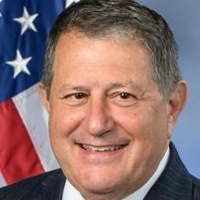
Joseph Morelle
Representative
NY-25
The Supreme Court Justice Circuit Riding Act seeks to revive the historical practice of Supreme Court justices serving on federal circuit courts. This legislation mandates that justices spend at least 10 days annually hearing oral arguments across various circuits. The stated goal is to reconnect the Court with the American public and lower courts, potentially rebuilding public trust.
Supreme Court Justice Circuit Riding Act Mandates 10 Days of Local Court Service Annually
The Supreme Court Justice Circuit Riding Act would require Supreme Court justices to step out from behind the marble pillars in D.C. and return to the 'circuit riding' tradition of the 1800s. Under this plan, every justice must sit on at least one federal appeals court panel and participate in at least 10 days of oral arguments across the country every year. This isn't just a suggestion; the bill specifically bans justices from using Zoom or teleconferencing to meet this requirement, meaning they actually have to show up in cities like New Orleans, Denver, or San Francisco to hear cases alongside local judges. The goal is to bridge the gap between the nation’s highest legal minds and the everyday realities of the communities their rulings affect.
Back to the Basics
This bill focuses on getting justices out of the 'D.C. bubble' by having the Chief Justice assign them to various regional circuits during the court’s summer recess from July to October. Section 3(b) of the bill sets strict rules for this service: a justice can’t just sit with the same local judge over and over, and they are prohibited from voting on 'en banc' rehearings—those big cases where every judge in a circuit weighs in at once—if they weren't on the original panel. For a small business owner or an employee involved in a federal labor dispute, this could mean your case is heard by a Supreme Court justice right in your home region, rather than your legal fate being decided years later in a distant, high-stakes D.C. hearing.
The Logistics of a Road Trip
Moving nine of the most powerful people in the country around the map isn't cheap or simple. The bill authorizes reimbursement for 'reasonable travel, lodging, and other expenses' for the justices and their support staff (Section 3(c)). While this ensures they aren't paying out of pocket to do their jobs, it does create a new recurring cost for taxpayers. There’s also the question of focus; while the bill points out that the Supreme Court’s caseload has dropped significantly since the 1960s, adding mandatory travel and lower-court preparation could strain the administrative staff who manage the justices' complex schedules. It’s a trade-off between the efficiency of staying put and the perspective gained by seeing how broad Supreme Court rulings actually play out in local courtrooms.
Fresh Eyes on Local Laws
By requiring justices to engage with a 'broader range of legal issues and state laws,' the bill hopes to make their final rulings more practical. For example, if a justice hears a series of technical environmental cases in the Pacific Northwest, they might better understand the 'practical difficulties' lower courts face when trying to apply vague federal regulations to local industries. However, the bill leaves a lot of the 'how' to the justices themselves, giving the Chief Justice 180 days to write the specific regulations for how these assignments will work. This creates a bit of a gray area: until those rules are written, we won't know exactly how much say a justice has in where they go or which types of cases they'll end up hearing.