This bill establishes the voluntary Alan S. Lowenthal Blue Whales, Blue Skies Act program to reduce air pollution, underwater noise, and whale strikes off the U.S. west coast by recognizing vessels that voluntarily reduce their speed.
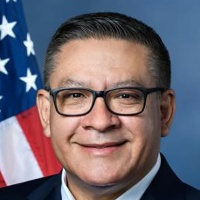
Salud Carbajal
Representative
CA-24
This bill establishes the voluntary "Alan S. Lowenthal Blue Whales, Blue Skies Act" program, managed by NOAA, to reduce air pollution and underwater noise while minimizing fatal vessel strikes on whales off the U.S. west coast. The program encourages vessel owners to voluntarily reduce ship speeds to 10 knots or less in designated areas. Participating vessels achieving compliance will receive annual "Excellence Awards" and permission to display an official recognition logo.
New 'Blue Whales and Blue Skies' Program Sets 10-Knot Speed Limit to Protect Marine Life and Clean Coastal Air.
The Alan S. Lowenthal Blue Whales, Blue Skies Act creates a voluntary federal program designed to slow down massive shipping vessels along the U.S. West Coast. Within 12 months of enactment, NOAA will establish a system that encourages ships over 300 gross tons to drop their speed to 10 knots or less. The goal is to tackle four problems at once: cutting air pollution and greenhouse gases, reducing underwater noise that messes with whale communication, and preventing fatal 'ship strikes' where whales are killed by fast-moving hulls. This isn't a mandatory rule—it's an opt-in system that rewards companies for being good neighbors to the ocean.
The Logistics of Slowing Down
To get this off the ground, the government is modeling the initiative after successful local programs already running in places like Santa Barbara and the San Francisco Bay. For a shipping company, the 'hook' here isn't a check in the mail—the bill explicitly says no financial incentives are allowed—but rather a public relations boost. Companies that hit the 10-knot target (roughly 11.5 mph) get an official Excellence Award and a special logo they can slap on their marketing materials. However, the bill keeps things honest: if a company wants to use that logo, they have to clearly state the exact percentage of the distance their fleet actually spent at slow speeds. This prevents a company from claiming 'green' status if only one of their fifty ships actually slowed down.
Real-World Impacts for Coastal Life
If you live in a coastal city or work near a port, this bill hits home through the air you breathe. Large ships burning heavy fuel at high speeds are major polluters; slowing them down is like taking thousands of cars off the road in terms of nitrogen oxides and sulfur. For those in the maritime industry, the bill includes a safety valve: if the Coast Guard tells a captain to speed up for safety or navigation reasons, that trip doesn't count against the company’s environmental score. It’s a pragmatic approach that recognizes that while we want to save whales, we can't compromise the safety of the crew or the cargo.
Looking Toward the Horizon
While the program starts with the current hotspots off the California coast, it doesn't plan to stay small. Within four years, NOAA has to report back to Congress on whether this slow-speed zone can be stretched across the entire Pacific coast from Canada to Mexico. The main challenge will be the 'Medium' level of vagueness regarding 'alternative maximum speeds.' The bill allows the Under Secretary to change the speed limit for certain circumstances, which could lead to some confusion for fleet managers trying to earn their awards. Still, for the average person, the bill represents a rare 'win-win'—cleaner air and safer oceans without adding new mandatory taxes or heavy-handed regulations on the supply chain.