This act clarifies that state Medicaid matching funds can explicitly include public funds provided by local government subdivisions.
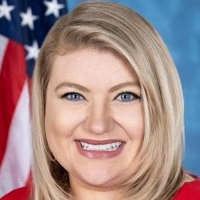
Katherine "Kat" Cammack
Representative
FL-3
The Medicaid Financing Clarification Act of 2026 explicitly confirms that public funds provided by local government entities, such as counties and cities, can be counted toward a state's required matching contribution for Medicaid. This legislation clarifies the definition of "public funds" to ensure transparency and consistency in how states meet their financial obligations under the Medicaid program.
Medicaid Financing Clarification Act of 2026: New Rules for How Local Tax Dollars Fund State Healthcare
Medicaid is a massive financial puzzle where the federal government and states split the bill, but the 'Medicaid Financing Clarification Act of 2026' is stepping in to clarify exactly which pieces of the puzzle count as state money. This bill amends Section 1902(a)(2) of the Social Security Act to explicitly allow states to use public funds from 'political subdivisions'—think your local county, city, or town—to meet their required financial match for Medicaid. By formalizing this, the bill ensures that local tax revenues, fees, and even legal settlements can officially help keep the state’s healthcare engine running.
The Local Money Trail
Under the new definitions in Section 1905, 'public funds' gets a major makeover. It’s no longer a vague term; it now specifically includes everything from your local property taxes and interest earned on city accounts to tobacco settlement money and patient care revenues from public hospitals. For a resident in a county that operates its own public health clinic, this means the revenue that clinic earns can be legally funneled back into the state’s Medicaid matching pool. The bill also draws a hard line: federal money cannot be used to 'match' other federal money unless a specific law says otherwise. This prevents states from using one federal grant to unlock another, keeping the financial responsibility grounded in state and local resources.
Who’s Who in the New Rules
To make sure there’s no confusion about who can contribute, the bill defines a 'political subdivision' as any separate legal entity of a state with governmental functions. This covers the bases for everyone from a village board to a large city council. For the average person, this might feel like inside baseball, but it has a real-world impact on how local budgets are managed. If a city has a surplus from fines or resource leases, this bill provides a clear legal pathway for that money to support Medicaid services in that community. It essentially gives local governments a seat at the financing table, ensuring that the money already being collected at the local level can be used efficiently to maintain healthcare access without the state needing to hunt for new revenue streams elsewhere.