This Act directs the review, implementation, and evaluation of evidence-based mental health interventions and staff wellness supports within Head Start programs.
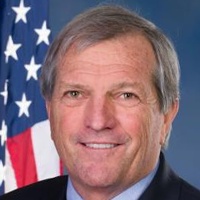
Mark DeSaulnier
Representative
CA-10
The Early Childhood Mental Health Support Act aims to improve behavioral health outcomes for children in Head Start programs. It requires the review and identification of evidence-based mental health interventions and staff wellness practices suitable for these settings. The bill authorizes grants for implementing these identified strategies and establishes a framework for evaluating their effectiveness.
Early Childhood Mental Health Support Act Authorizes $100 Million for Head Start Wellness and Behavioral Interventions Through 2036
The Early Childhood Mental Health Support Act is a long-term play to upgrade how we handle behavioral health for our youngest learners. Starting in 2027, the bill authorizes $100 million over a decade to identify and roll out evidence-based mental health interventions specifically for Head Start and Early Head Start programs. It’s not just about the kids, though; the bill explicitly requires the government to find ways to support staff wellness and self-care, acknowledging that the people teaching our toddlers are often burnt out and under-resourced (Section 2). Within two years, the Department of Health and Human Services (HHS) has to finalize a list of proven curricula and trauma-informed care approaches that actually work across different racial and geographic lines.
Tools for the Classroom
Once the best practices are identified, the bill sets up a grant system to get these tools into classrooms in urban, suburban, and rural areas (Section 3). For a teacher at a local Head Start center, this could mean new training on how to handle a child’s emotional outbursts using a 'tiered response'—basically, having a game plan for everyone from the kid who’s just having a bad day to the one dealing with deep-seated trauma. To make sure this isn't just another government manual gathering dust, the bill also allows for the creation of up to five 'Best Practice Centers' at universities to train the next generation of staff before they even hit the job market (Section 6).
Measuring What Works
Because $100 million is a lot of taxpayer money, the bill includes a built-in 'BS detector.' HHS has to develop an evaluation method to see if these new programs actually achieve their goals and, importantly, if they save the government money in the long run (Section 4). For the local centers, this evaluation is totally voluntary and designed to be 'minimal burden' (Section 5). This means a center director can choose to opt-in to see how they’re doing and get extra technical help without being buried in extra paperwork if they decide it’s not for them.
The Fine Print on Implementation
While the bill is high on support, there are some 'wait and see' details. The government gets to decide what 'appropriate credentials' are required to lead these new interventions, which could mean extra certification hurdles for current staff depending on how the rules are written. Also, because the evaluation is voluntary, there's a risk that the programs most in need of a tune-up might skip the check-up entirely. However, by focusing on both child development and the mental health of the adults in the room, the bill tries to tackle the reality that you can’t have a healthy classroom if the teacher is running on empty.