This bill appropriates funding for Energy and Water Development programs across the Corps of Engineers, Department of the Interior, Department of Energy, and independent agencies for fiscal year 2027, while imposing strict spending controls and policy restrictions.
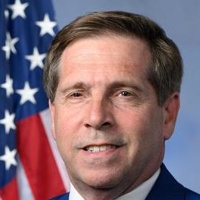
Charles "Chuck" Fleischmann
Representative
TN-3
This bill provides fiscal year 2027 appropriations for the Departments of Energy and the Interior, along with the Army Corps of Engineers and several independent agencies. It allocates billions for water infrastructure, energy research, and nuclear security while imposing strict controls on how agencies can reprogram funds. Key policy provisions include restrictions on foreign entities in energy grants and requirements for local consent regarding nuclear waste storage.
Energy and Water Spending Bill Pours $1.8B Into Nuclear, Blocks Clean-Building Rules, and Reshapes Who Gets Federal Energy Dollars
The Energy and Water Development Appropriations Act for fiscal year 2027 lays out how the federal government will spend money on everything from nuclear weapons maintenance to flood control to energy research through September 30, 2027. The bill directs more than $22 billion toward nuclear weapons stockpile work, $8.5 billion to scientific research, $6.6 billion for cleaning up contaminated Cold War-era sites, and roughly $9 billion to the Army Corps of Engineers for waterways, flood protection, and ecosystem restoration. But tucked inside the funding tables are policy provisions that would pause clean-energy building standards, restrict who can buy oil from the Strategic Petroleum Reserve, and shift $2.675 billion from existing infrastructure accounts into advanced nuclear reactor projects.
Nuclear Gets the Spotlight — and a Big Check
The Department of Energy's nuclear programs would receive $1.8 billion in direct funding. On top of that, the bill redirects $2.675 billion from unspent Infrastructure Investment and Jobs Act accounts toward deploying small modular reactors and demonstrating advanced nuclear designs. That's a significant pivot — money Congress originally authorized for broader infrastructure purposes gets rerouted to a specific technology bet.
For context, small modular reactors are compact nuclear plants designed to be factory-built and shipped to sites, potentially lowering construction costs and timelines compared to traditional nuclear facilities. Companies like NuScale Power have been working to commercialize the technology, though no commercial SMR is operating in the U.S. yet. The redirected billions could accelerate that timeline — or concentrate federal energy investment in a technology that hasn't yet proven itself at scale.
The bill also invests $1.85 billion in critical mineral supply chains, aiming to reduce reliance on foreign sources for materials essential to batteries, electronics, and clean-energy hardware.
The Clean-Buildings Rule Hits a Wall
One provision blocks any funding for implementing or enforcing a 2024 rule that set clean energy standards for new federal buildings. Practically speaking, this pauses requirements that new government construction meet certain energy performance or emissions benchmarks.
If you work in construction or building trades, this could mean federal projects in your area move forward without the clean-energy specifications that were set to take effect. For communities near federal facilities, it could delay the transition to lower-emission government buildings. The provision doesn't repeal the rule — it just starves it of enforcement money for fiscal 2027.
Who Can't Get Federal Energy Dollars
The bill prohibits the Department of Energy from awarding grants, contracts, or loans worth more than $10 million to entities from China, Russia, and other designated "countries of concern." A risk-based screening process would enforce the restriction.
For university researchers collaborating with Chinese or Russian institutions on energy projects, this could disrupt joint work. For domestic companies with international supply chains or partnerships, the screening process adds a compliance hurdle. The restriction aims to protect national security interests around sensitive energy technology, but the practical effect may ripple through research communities that rely on international collaboration.
Strategic Petroleum Reserve: No Sales to China
The bill flatly bars selling Strategic Petroleum Reserve oil to any entity owned or controlled by the Chinese Communist Party. It also requires that any drawdown sale contracts include language forbidding export of that oil to China.
The SPR, stored in salt caverns along the Gulf Coast, serves as an emergency crude oil supply. During price spikes or supply disruptions, the government can release barrels to stabilize markets. This provision means that even if a sale would otherwise make economic sense, Chinese-affiliated buyers are off the table — and purchasers must contractually promise not to resell the oil to China.
Guns on Corps Land
Under Title I, the Army Corps of Engineers cannot ban firearms on its land and water projects — think lakes, dams, and recreation areas — as long as the person carrying complies with state and federal gun laws. The Corps previously had authority to set its own firearm policies on these properties. This provision effectively overrides that, meaning visitors to Corps-managed recreation sites may encounter more people carrying firearms than under previous rules.
Water in the West: More Time, More Money
For communities in Western states waiting on water infrastructure, the bill extends deadlines and raises funding caps on several key programs. The Reclamation Wastewater and Groundwater program's cap jumps from $50 million to $177.5 million. Desalination project limits rise from $30 million to $106.5 million. Tribal water projects — including work on the Fort Peck Reservation and in Northwestern New Mexico — get extended timelines to finish.
The Bureau of Reclamation receives $1.675 billion overall, with money flowing to Colorado River basin funds, the San Gabriel Basin Restoration Fund, and dam safety work. For farmers in the Central Valley, for rural towns waiting on reliable drinking water, and for tribal nations with longstanding water rights claims, these dollars and deadline extensions translate to projects that might actually cross the finish line.
Nuclear Waste: Local Consent Required
The bill bans federal spending on private agreements for temporary storage of spent nuclear fuel unless the host state, local governments, and affected tribes have officially consented. Facilities already licensed by the Nuclear Regulatory Commission before the law takes effect are exempt.
This gives communities a direct veto over temporary nuclear waste storage proposals in their backyards — a meaningful shift for places that have been eyed as potential storage sites.
The Fine Print on Oversight
Several provisions tighten Congress's grip on agency spending. The Department of Energy must give advance notice for awards over $1 million. The Nuclear Regulatory Commission needs to report monthly on budget balances. Agencies can't freely shuffle money between accounts without committee approval. These rules add transparency but also reduce the speed at which agencies can respond to changing conditions.
What's Missing
The bill doesn't specify what happens to the clean-buildings rule after fiscal 2027 — whether the pause is a one-year timeout or the start of something longer. The "risk-based screening process" for foreign entity restrictions isn't detailed, leaving agencies to define how they'll evaluate partnerships. And the $2.675 billion redirection from infrastructure accounts doesn't spell out which specific projects lose funding to make room for the nuclear investment.
For everyday people, this bill shapes what gets built, what gets cleaned up, and who gets to participate in federal energy programs over the next year. Whether you live near a Corps-managed lake, work in building trades, rely on Western water infrastructure, or just care about where federal energy dollars land, the provisions here will ripple through communities in concrete ways.