This bill establishes a three-year pilot program to provide financial assistance for medically necessary infant formula or donor milk to eligible families not covered by WIC.
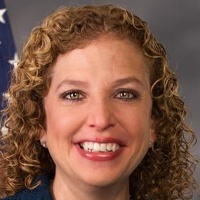
Debbie Wasserman Schultz
Representative
FL-25
This bill establishes a three-year pilot program administered by the Secretary of Health and Human Services to provide financial assistance for medically necessary infant formula or donor milk. The program targets eligible individuals who are not covered by WIC but have specific medical or situational needs preventing them from breastfeeding. The Secretary must implement the program within one year of enactment and submit annual reports to Congress on its operation.
New Bill Proposes 3-Year Pilot for Medically Necessary Infant Formula and Donor Milk Assistance, Starting 2027
Alright, let’s talk about something that hits close to home for new parents: feeding babies. A new bill, aptly named the “Constance C. McDaniel Medically Necessary Infant Formula and Donor Milk Act,” is looking to set up a three-year pilot program that could be a real lifeline for some families. Essentially, it’s designed to provide financial help for parents or legal guardians who need to buy special infant formula or donor milk for their little ones under one year old, especially if they don't qualify for the WIC program.
Filling a Critical Gap
This bill aims to step in where existing programs might fall short, specifically for families whose babies have very particular medical needs. We’re talking about situations where a mom can't breastfeed due to a diagnosed medical condition, a chronic illness like cancer, or even a mental health issue. It also covers cases like adoption, maternal mortality, or surrogacy, or if the baby themselves has medical challenges such as feeding tubes, digestive problems, latching issues, or allergies. The idea is to make sure these infants get the nutrition they need, even when the usual options aren't on the table. The Secretary of Health and Human Services will be figuring out the best way to get this assistance out there, whether it's through vouchers, reimbursing parents directly, or giving grants to local non-profits and government groups that work with families.
How It Works and Who Benefits
So, if you’re a parent or legal guardian of a child under one and you’re not WIC-eligible, but your doctor (think pediatrician, OB-GYN, or even a nurse practitioner) says there’s a medical reason for specialized formula or donor milk, this program is for you. The bill defines “covered infant formula” as any formula legally sold in the U.S. that meets federal standards, and “donor milk” as human milk collected, pasteurized, and distributed by an FDA-compliant human milk bank. This specificity helps ensure safety and quality for vulnerable infants. The bill also has a strong focus on getting the word out, requiring the Secretary to work with healthcare providers so families know this resource exists. Plus, there’s a built-in evaluation system, with annual reports to Congress, to track how many families are helped and how much formula or milk is provided, which is smart for accountability.
The Nitty-Gritty on Timing and Funding
This pilot program is slated to kick off within one year of the law’s enactment and will run for three years. It’s authorized for $15 million per year, specifically for fiscal years 2027 through 2031, which is a solid chunk of change dedicated to infant health. Now, one thing to keep an eye on is that while the bill lays out clear medical reasons for eligibility, it also leaves a bit of wiggle room for the Secretary to determine “another medical issue” for both mothers and infants. This could be a good thing, allowing flexibility for unforeseen medical situations, but it also means the specifics of those expanded criteria will be crucial. Overall, this bill looks like a thoughtful step towards supporting families during one of life's most demanding (and expensive) phases, especially when medical curveballs are thrown into the mix.