The SHADOW Act establishes new transparency requirements and stricter standards for the Supreme Court when issuing stays pending appeal or granting injunctions.
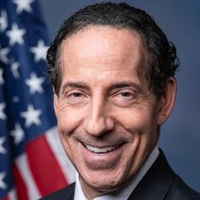
Jamie Raskin
Representative
MD-8
The SHADOW Act aims to increase transparency and establish new standards for the Supreme Court when issuing stays pending appeal or granting injunctions. It requires the Court or a Justice to provide written, public explanations for granting or denying these orders, detailing the specific harms and public interest considerations. Furthermore, the bill sets a high bar for issuing stays, requiring a showing of concrete, irreparable injury beyond the normal effects of the ruling.
SHADOW Act Mandates Written Explanations for Supreme Court Emergency Orders Within 7 Days
The Supreme Court often makes major decisions through emergency orders—sometimes called the 'shadow docket'—without the usual months of public hearings or detailed legal opinions. The SHADOW Act changes that by amending Section 2101(f) of title 28 to require the Court to show its work. Whenever the Court decides to pause a lower court’s ruling (a stay) or issue a direct order (an injunction), it must now provide a written explanation on the public docket. This means no more high-stakes decisions appearing out of thin air without a clear 'why' attached.
Showing the Work
Under the new rules in Section 2, the Court can’t just say 'yes' or 'no' to a stay request. They have to specifically address three things in writing: whether the person asking for the stay would suffer a unique, irreparable injury; whether the stay would hurt other people involved; and whether the stay serves the public interest. Think of it like a loan officer having to give you a detailed letter explaining exactly why your application was denied instead of just sending a form letter. For example, if a lower court rules that a new local regulation is unconstitutional, the Supreme Court can’t just pause that ruling indefinitely without explaining why the immediate harm of leaving it in place outweighs the public’s interest in the law.
Tightening the Reins on Emergency Orders
The bill also puts a leash on the 'All Writs Act' in Section 3, which the Court uses to issue injunctions. Now, a Justice can only step in if there is a 'critical and exigent' circumstance and an 'indisputably clear' legal right at stake. This raises the bar for when the Court can jump into a case before it has gone through the full appeals process. To keep things moving, these explanations must be published immediately. If it’s a true emergency where every second counts, the Court gets a small grace period, but they still have to post the written reason within seven days. It’s a move toward making the highest court in the land operate with the same transparency we expect from a local planning board.
Real-World Precedents and Protections
A key detail for anyone following legal battles—from labor disputes to property rights—is that these emergency stays can no longer be used as 'precedent' for future cases. This prevents a quick, emergency decision made on a Tuesday from becoming the permanent law of the land by Wednesday. It ensures that the 'real' legal debate happens in the light of day with full arguments. While the bill uses some legal terms like 'irreparable injury' that still leave room for interpretation, the requirement for a public paper trail makes it much harder for the Court to shift national policy quietly behind the scenes.