This Act establishes the United States Commission on Hate Crimes to investigate factors contributing to hate crimes and recommend improvements for reporting and prevention, alongside mandating a GAO audit of FBI hate crime data collection.
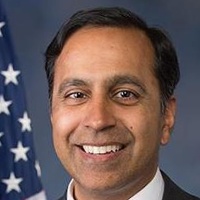
Raja Krishnamoorthi
Representative
IL-8
The Hate Crimes Commission Act of 2026 establishes a temporary United States Commission on Hate Crimes to investigate factors contributing to hate crimes and recommend federal actions to improve reporting and prevention efforts. The Commission will be composed of ten members from law enforcement and civil rights communities. Furthermore, the bill mandates an independent audit by the Government Accountability Office to assess the accuracy and reliability of the FBI's hate crime data collection methods.
Hate Crimes Commission Act of 2026: New 10-Member Panel and FBI Audit to Tackle Underreporting and Online Threats
The Hate Crimes Commission Act of 2026 creates a temporary, 10-member federal commission tasked with a deep dive into why hate crimes remain high and how we can actually track them accurately. Beyond just talking, the bill mandates a rigorous audit of the FBI’s data collection methods by the Government Accountability Office (GAO). The goal is to fix the ‘zero-reporting’ phenomenon, where local police departments report no hate crimes for years despite evidence to the contrary, and to provide a clear roadmap for federal agencies to prevent bias-motivated violence.
Balancing the Badge and the Bench
The new United States Commission on Hate Crimes won’t be a group of career politicians; in fact, Section 3 explicitly bans current elected officials from serving. Instead, the 10 members will be split evenly between the law enforcement community and the civil rights community—defined as nonprofits that document bias or provide legal education. This 50/50 split is designed to ensure that recommendations for new police policies are actually practical for officers on the beat, while still addressing the real-world fears of targeted communities. If you’re a local business owner or a resident in a diverse neighborhood, this balance matters because it aims to turn high-level data into actual safety improvements on your street.
Cracking the Code on Underreporting
One of the biggest hurdles in stopping hate crimes is that the current data is often a mess. Section 6 of the bill targets ‘zero-reporting agencies’—local or state police departments that report zero incidents to the FBI in a full year. The GAO audit will compare FBI stats against data from civil rights groups and victim surveys to see where the gaps are. For anyone who has ever felt that a local incident was ‘swept under the rug,’ this provision is the bill’s attempt at accountability. It looks for automated ways to flag when a city’s stats look suspiciously inconsistent with reality, pushing for a more honest picture of public safety.
The Digital Frontier and the One-Year Clock
This isn't a commission intended to sit around for a decade; it operates on a strict timeline. Members must be appointed within 60 days, and a final report is due just one year after that. Under Section 4, the group is specifically ordered to investigate how social media and technology contribute to the rise in hate crimes. This means looking at how online vitriol translates into physical threats at your local grocery store or house of worship. While the bill has a ‘sunset clause’ that ends the commission 90 days after the report is filed, the real test will be whether the FBI and other agencies actually follow the audit’s recommendations to modernize their systems.