This Act establishes the Julius Rosenwald and Rosenwald Schools National Historical Park and a related National Network to commemorate Julius Rosenwald's philanthropic legacy in African American education.
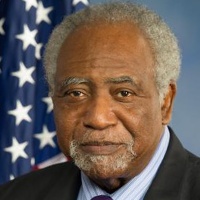
Danny Davis
Representative
IL-7
This Act establishes the **Julius Rosenwald and Rosenwald Schools National Historical Park** to commemorate the life and philanthropic legacy of Julius Rosenwald, particularly his partnership with Booker T. Washington to build over 5,000 schools for African American children in the segregated South. The bill designates specific sites for the park, including the former Sears complex in Chicago, and directs the National Park Service to establish a national network connecting remaining Rosenwald Schools across the country. This effort aims to preserve and interpret the profound impact these schools had on education and civil rights history.
New National Historical Park Honors Rosenwald Schools That Educated 600,000 Black Students During Segregation
This bill creates the Julius Rosenwald and Rosenwald Schools National Historical Park—a new unit of the National Park System commemorating an unlikely partnership that built nearly 5,000 schools for Black children across the segregated South between 1912 and 1932. The park will anchor itself at the 40-acre former Sears merchandising complex in Chicago's North Lawndale neighborhood and include three surviving Rosenwald School sites in Maryland, South Carolina, and Virginia. The legislation also establishes a Rosenwald Schools National Network to connect and support remaining school sites across the 15 states where they once operated.
The Sears Executive Who Built Schools Instead of Warehouses
Julius Rosenwald didn't have to care about Black education in the Jim Crow South. He was the son of German-Jewish immigrants who had turned Sears, Roebuck and Co. into the Amazon of its day—the nation's dominant retailer. But Rosenwald took his fortune and aimed it at a specific problem: millions of Black children in the South had barely any schools to attend, and the ones that existed were chronically underfunded.
His partnership with Booker T. Washington produced something remarkable. The Rosenwald Fund provided architectural plans and seed money, but the real engine was local. Black communities had to raise matching funds, donate land, and often supply labor. The result was roughly 5,000 schools that educated more than 600,000 Black children—including future civil rights icons like Congressman John Lewis, Maya Angelou, Medgar Evers, and Nina Simone.
The bill directs the National Park Service to tell this story at two existing sites: the Lincoln Home National Historic Site in Illinois (near Rosenwald's childhood home) and the Tuskegee Institute National Historic Site in Alabama (where Washington founded the institute and architects designed the early schools).
What Actually Gets Built—and When
Here's where the practical details matter. The park doesn't spring into existence the moment this bill passes. Section 4(a)(1) delays official establishment until the Secretary of the Interior determines enough land has been acquired to form a "manageable unit." Once that bar is cleared, the Secretary publishes notice in the Federal Register—and the clock starts.
The park's footprint includes:
- The Sears complex in Chicago (the 1905–1906 Administration Building, catalog building, power plant, Nichols Tower, and the Sears Sunken Garden across the street)
- San Domingo Rosenwald School in Sharptown, Maryland
- Saint George Rosenwald School in Saint George, South Carolina
- Woodville Rosenwald School in Gloucester County, Virginia
- Any additional Rosenwald School Congress designates later
Two of those school sites—Saint George and Woodville—get a distinct treatment. They'll be "associated with" the park but won't transfer to or be directly managed by the National Park Service. Think of it as an affiliate designation rather than full federal ownership.
The headquarters and visitor center will be situated within or near the former Sears Merchandising Complex in North Lawndale, Chicago. The Secretary can acquire a facade or other easement on Nichols Tower and lease space for park administration and visitor services. If that doesn't work out, the bill allows acquiring nearby property outside the park boundary instead.
The Money Mechanics
Land acquisition comes with strings attached. The San Domingo School in Maryland can only be acquired by donation, purchase with donated funds, or exchange—no eminent domain, no direct federal purchase. That's a meaningful limitation that puts the onus on fundraising rather than government acquisition.
The cooperative agreement structure is where much of the day-to-day work will happen. The Secretary can enter agreements with Illinois, Maryland, South Carolina, Virginia, Chicago, and other public or private entities to support interpretive programs, signage, exhibits, and preservation work. Federal funds can flow through these agreements for marking, interpreting, improving, or restoring covered properties.
There's a clawback provision worth noting: if a property that received federal improvement funds is later converted to uses inconsistent with the park's purpose, the U.S. gets reimbursed—the greater of either the actual federal dollars provided or the increase in property value from those improvements, as determined by the Secretary at the time of conversion.
The Network: More Than Just Four Sites
Section 5 creates something potentially bigger than the park itself: the Rosenwald Schools National Network. This is the connective tissue linking remaining Rosenwald School sites across the country—not just the three named in the bill, but any site, facility, or program that relates to this history.
The Secretary must actively solicit proposals from interested sites and can bring them into the Network if they're listed on or eligible for the National Register of Historic Places, or if they serve an educational, research, or interpretive function tied to Rosenwald's legacy.
Once in the Network, sites can access technical assistance, grants, and educational materials. The NPS will create an official uniform symbol for the Network—think of it as a branding and credibility boost for local preservation efforts. The Secretary also gets authority to recommend additional Rosenwald School sites for full inclusion in the Park itself.
The Fellowship Legacy
The bill doesn't stop at schoolhouses. It explicitly directs the Park to interpret Rosenwald's broader philanthropic footprint, including the Julius Rosenwald Fund's fellowship program. Between 1928 and 1948, the Fund awarded fellowships to nearly 900 individuals—including Langston Hughes, James Baldwin, Marian Anderson, Ralph Ellison, and Dr. Charles Drew. The Fund also backed early NAACP legal cases that laid groundwork for Brown v. Board of Education.
Rosenwald's Chicago roots get their due as well: founding the Jewish Federation of Metropolitan Chicago, serving on the board of Jane Addams' Hull House, and being the founding donor of the Chicago Museum of Science and Industry.
What Happens Next
The management plan deadline is three fiscal years after funds first become available—not after enactment. That means the substantive planning work waits on appropriations. The map of park boundaries must be prepared "as soon as practicable" and kept available for public inspection at NPS offices.
For communities near the three named school sites, this means potential heritage tourism traffic and federal preservation dollars—but also the reality that two of those sites won't see direct NPS management. For the North Lawndale neighborhood in Chicago, the visitor center represents an investment in an area with deep historical significance to both Sears and the city's industrial past. For the broader network of surviving Rosenwald Schools scattered across the South, the Network offers a formal connection to federal resources without requiring federal ownership—a structure that respects local control while opening doors to preservation funding.