This Act allows McKinney-Vento grant recipients to request a temporary waiver of spending caps for certain activities between fiscal years 2027 and 2030, provided they meet specific local need and planning requirements.
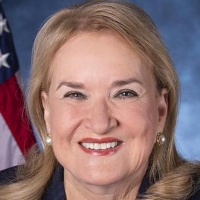
Sylvia Garcia
Representative
TX-29
The Incentivizing Local Solutions to Homelessness Act allows local grant recipients under the McKinney-Vento Act to request a temporary waiver of certain spending caps for funds received between fiscal years 2027 and 2030. This flexibility is designed to better address specific local needs, provided recipients submit a detailed plan and demonstrate community input. Waivers will be denied if the recipient engages in harmful relocation practices without offering housing alternatives.
Homelessness Grants Get Flexibility Overhaul: Local Communities Can Request Spending Cap Waivers Starting 2027
The McKinney-Vento Homeless Assistance Act—the federal government's main vehicle for funding local homelessness programs—is getting a flexibility upgrade. The Incentivizing Local Solutions to Homelessness Act lets cities, counties, and nonprofit grant recipients request waivers from the law's standard spending caps for funds distributed between fiscal years 2027 and 2030. The waiver process comes with guardrails: public input requirements, a 60-day deadline for HUD to say yes or no, and a hard prohibition on approving waivers for any recipient that threatens to relocate homeless individuals without first offering them housing alternatives.
Breaking the Spending Straitjacket
Here's the core problem this bill addresses. Under Section 415(b) of the McKinney-Vento Act, grant recipients face limits on how much of their federal money can go toward certain activities—think supportive services, administrative costs, or other categories that don't involve directly building or acquiring housing units. Those caps make sense on paper. Nobody wants federal homelessness dollars getting eaten up by overhead.
But in practice, a one-size-fits-all spending formula doesn't always match what's happening on the ground. A rural county dealing with a sudden wave of evictions might need to pour money into rapid rehousing case management. A city facing a fentanyl crisis might need to shift resources toward supportive services that connect people with treatment before housing placement makes sense. Under the current system, the spending caps apply regardless of local conditions.
This bill doesn't eliminate the caps. It creates a structured off-ramp. For grants covering fiscal years 2027 through 2030, recipients can submit a waiver request containing exactly four things: a demonstration of local needs, a detailed spending plan, an explanation of how the plan fits their broader housing strategy (called a Consolidated Plan), and whatever public input they gathered.
The Public Gets a Seat at the Table
Before a local government or nonprofit can even ask HUD for a waiver, they have to do some legwork. The bill requires them to notify every subrecipient and every local Continuum of Care—the regional planning bodies that coordinate homelessness services—that waivers are available. Then they must actively solicit public input on whether a waiver is needed and how the freed-up funds should be used.
This matters. Homelessness policy decisions often get made in rooms most people never see. By mandating public input and requiring recipients to include that feedback in their waiver requests, the bill builds in a transparency mechanism that lets service providers, advocates, and community members weigh in before decisions get locked in.
Once a waiver request lands at HUD, the Secretary must publish it on the department's website. That means journalists, watchdog groups, and interested residents can see exactly who's asking for what and why. The Secretary then has 60 days to approve or deny—a tight window that prevents requests from languishing in bureaucratic purgatory.
The Relocation Red Line
The bill's sharpest teeth come in the form of a mandatory denial provision. If a grant recipient relocates or threatens to relocate homeless individuals or their property without first offering emergency shelter, rapid rehousing, transitional housing, permanent supportive housing, or other permanent housing options, the Secretary must deny their waiver request. No discretion, no exceptions.
This addresses a grim reality in some communities: the practice of clearing encampments or displacing homeless populations without providing anywhere for those people to go. The provision essentially says: if you want flexibility in how you spend federal homelessness dollars, you can't use that flexibility while simultaneously making people's situations worse by forcing them to move without offering alternatives.
The Fine Print on Revocation
Once approved, a waiver stays in effect for the entire performance period of the FY 2027–2030 grants—unless the recipient decides to revoke it. But revocation isn't a simple flip of a switch. The recipient must first consult subrecipients, gather their input, then submit a written notification to the Secretary explaining the reasons for the revocation and summarizing what subrecipients said. The Secretary publishes the whole thing online.
This creates a paper trail. If a city gets a waiver, then later decides to give it up, the public gets to see why—and whether the subrecipients who actually deliver services agreed with the move.
What This Means in Practice
For the average person, this bill won't change anything overnight. But for anyone who's watched their city struggle with homelessness and wondered why federal money can't be deployed more nimbly, the waiver mechanism represents a meaningful shift in how Washington trusts local decision-makers.
Consider a mid-sized city where the biggest barrier to housing isn't a lack of units—it's that the local rental market requires first month's rent, last month's rent, and a security deposit upfront. Under standard spending caps, the city might be limited in how much grant money it can put toward direct financial assistance for those move-in costs. With a waiver, if the city can demonstrate that this is what local conditions demand and the public supports it, HUD can greenlight a different spending mix.
The bill doesn't guarantee waivers will be granted. It doesn't change the underlying funding levels. What it does is open a door—and then require that the door stay visible to the public, with clear rules about who can walk through it and who gets locked out.
The relocation prohibition alone gives the bill real enforcement weight. Any community that's been using aggressive encampment sweeps while simultaneously taking federal homelessness money now faces a choice: change the approach or lose the flexibility to tailor their spending. That's a concrete consequence tied directly to a concrete action—the kind of policy design that tends to produce actual behavioral change rather than aspirational language that sits on a shelf.