This Act establishes grant programs and a national center to improve healthcare provider training, expand the reproductive health workforce, educate individuals with disabilities, and research barriers to equitable reproductive health care access.
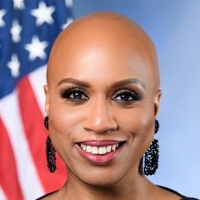
Ayanna Pressley
Representative
MA-7
The Reproductive Health Care Accessibility Act aims to eliminate barriers to reproductive healthcare for individuals with disabilities. It establishes several grant programs to train the existing healthcare workforce, expand the pipeline of disabled individuals entering reproductive health professions, and fund accessible patient education. Additionally, the bill creates a National Technical Assistance Center and mandates a study to identify effective practices and improve coordinated care systems.
Reproductive Health Care Accessibility Act Targets $60M Annually to Close Gaps for Disabled Patients by 2027
The Reproductive Health Care Accessibility Act is a comprehensive push to fix a long-standing glitch in our healthcare system: the fact that while 1 in 4 Americans lives with a disability, the infrastructure for reproductive and sexual health—from exam tables to doctor training—often fails to meet their needs. Starting in fiscal year 2027, the bill authorizes roughly $60 million per year through 2031 to fund specialized medical training, build a pipeline for disabled healthcare workers, and create accessible education materials. It’s not just about physical ramps; it’s about ensuring a patient with a disability doesn't face higher mortality rates or delayed screenings simply because a provider doesn't know how to use accessible diagnostic equipment or communicate effectively.
A New Playbook for Providers
Under Section 3, the bill puts $10 million a year into training the people you see at the clinic. Think of it as a professional upgrade for staff at places like Federally Qualified Health Centers and Title X clinics. The goal is to move past the 'one size fits all' approach. For example, a nurse would receive specific training on trauma-informed care and how to assist patients with physical or intellectual disabilities during a routine pelvic exam or prenatal visit. This isn't just a suggestion; the bill requires grant recipients to report back on their impact, and those reports will be public, so we can actually see if the training is moving the needle on patient outcomes.
Diversifying the Front Lines
Sections 4 and 5 focus on the 'pipeline' problem. The bill sets aside $15 million each for medical and nursing schools to recruit and support students with disabilities who want to enter the reproductive health field. This is a classic 'nothing about us without us' move. By providing stipends and mentorship, the bill aims to ensure that the person delivering your care might actually share your lived experience. Crucially, Section 4 includes a 'benefit protection' clause: if a student with a disability receives a stipend to help them through nursing school, that money won't count against their income limits for other federal or state benefits. It’s a pragmatic fix that prevents the government from giving with one hand while taking with the other.
Education Without the Jargon
Section 6 tackles the information gap with another $10 million annual investment. We’ve all seen medical brochures that are impossible to navigate; this provision funds the creation of sexual health and pregnancy resources in 'plain language' and other accessible formats. Imagine a young person with an intellectual disability being able to access clear, evidence-based info about contraception or their legal rights without needing a law degree to translate it. To keep everything coordinated, Section 7 creates a National Technical Assistance Center to help local clinics and tribal organizations figure out the logistics—like how to sync up transportation services with medical appointments so a patient isn't stranded at the clinic.
Mapping the Road Ahead
Because you can’t fix what you don’t measure, Section 8 authorizes a one-time $15 million research study in 2027. This isn't just a paper-pushing exercise; the Secretary of Health and Human Services has three years to figure out which programs are actually working and where the red tape is still blocking care. While the bill is heavy on grants—which always carries a risk of administrative bloat—the specific reporting requirements and the focus on 'evidence-based' methods suggest a real attempt at accountability. For the millions of parents and patients with disabilities, this bill represents a shift from being an afterthought in the doctor’s office to being the primary focus of the policy.