This Act mandates a federal review of bleeding disorder programs for women and girls and establishes a national education campaign to improve awareness, diagnosis, and treatment.
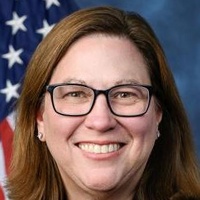
Julie Johnson
Representative
TX-32
The FED UP with Bleeding Disorders Act of 2026 aims to address the significant underdiagnosis and lack of specialized care for women and girls with bleeding disorders. The bill mandates an interagency review of federal programs concerning these disorders, followed by the establishment of a national public education and awareness campaign. This legislation seeks to improve timely diagnosis, enhance provider training, and increase access to appropriate treatment for affected populations.
FED UP with Bleeding Disorders Act Targets 16-Year Diagnosis Gap for Women, Authorizes $50 Million for Awareness Campaign
Here's a number that should stop you cold: 16 years. That's how long women, on average, wait for a bleeding disorder diagnosis. Some wait longer. Many never get one at all.
The FED UP with Bleeding Disorders Act of 2026 takes direct aim at that gap. The bill — formally the "Fostering Effective Diagnosis and Treatment for Underserved Populations with Bleeding Disorders Act of 2026" — does two main things: it orders a sweeping federal review of everything the government currently does (and doesn't do) about bleeding disorders in women and girls, then it funds a national awareness campaign to get the right information to patients and providers.
The Scale of the Problem
Congress lays out the stakes right in the bill's findings. As many as 1% of women in the U.S. may have a bleeding disorder — think von Willebrand disease, hemophilia, rare factor deficiencies — and most don't know it. Without a diagnosis, they can't access specialized hemophilia treatment centers, where mortality and hospitalization rates for bleeding complications run 40% lower than for patients treated elsewhere.
The economic toll is staggering. Heavy menstrual bleeding alone carries a $1 billion annual direct cost and $12 billion in indirect costs — missed work, lost productivity, the cascade of untreated symptoms. Then there are the hysterectomies. Up to half of girls and women carrying the gene for hemophilia A or B have clotting factor levels low enough to cause serious bleeding symptoms. In severe cases, hysterectomy becomes the recommended treatment. The bill explicitly flags that more research could reduce unnecessary hysterectomies and preserve fertility.
Pregnancy outcomes are another flashpoint. Women with undiagnosed bleeding disorders face higher risks of adverse pregnancy outcomes — a risk that could be managed if the condition were identified beforehand.
The Interagency Review: A Full Federal Audit
Section 3 directs the Secretary of Health and Human Services to lead an interagency review across four specific areas:
- The current science on bleeding disorders in women and girls
- Training and education for healthcare providers — what doctors, nurses, and other clinicians actually learn about these conditions
- Access to treatment, including care at hemophilia treatment centers and barriers for people in rural and underserved areas
- Inclusion of women and girls in clinical research — a long-standing blind spot in medical studies generally
The review pulls in a who's-who of federal agencies: HHS, CMS, HRSA, CDC, NIH, the VA, the Defense Health Agency, and the FDA. That's not bureaucratic box-checking. The Defense Health Agency connection matters because the bill's findings note that bleeding disorder research directly benefits the military's blood research program and efforts to treat severe injury and trauma.
Within two years, the Secretary must deliver a comprehensive report to four congressional committees and post it publicly on the HHS website. The report has to include a detailed assessment of past and ongoing research in each area, plus concrete recommendations for improving federal programs and coordinating across agencies.
Crucially, the bill requires a public comment period during the review, with specific attention to input from people living with bleeding disorders, patient advocacy organizations, and federally funded researchers. That means the women who've been waiting 16 years for answers get a formal seat at the table.
The Awareness Campaign: $10 Million a Year to Close the Knowledge Gap
Section 4 kicks in after the report is published. Within one year, HHS must award competitive grants or contracts to run a national, evidence-based education and awareness campaign. The bill authorizes $10 million per year from 2027 through 2031 — $50 million total.
The campaign has to reach two audiences: women and girls who might have bleeding disorders, and the healthcare providers who should be catching them. The provider list is specific and practical — school nurses, pediatricians, primary care physicians, family medicine doctors, OB/GYNs, and hematologists. That lineup makes sense. A school nurse noticing a girl's unusually heavy periods could be the first step toward a diagnosis. A primary care doctor who knows what to look for could cut years off that 16-year wait.
The campaign also has to reach rural and underserved areas, use culturally and linguistically appropriate materials, and push information out to public health departments, schools, medical schools, and healthcare facilities — especially those providing prenatal and pediatric care.
HHS has to set benchmarks, run qualitative assessments, and submit a final evaluation to Congress before the funding window closes.
What This Means in Practice
For a woman in a rural county, this bill could mean her local clinic finally has materials that help her OB/GYN connect heavy periods and easy bruising to a possible bleeding disorder — instead of dismissing the symptoms or reaching for a hysterectomy as the default fix.
For a school nurse, it could mean recognizing that a student who bleeds through her pad every hour isn't just having "bad periods" — she might need a referral to a hematologist.
For a pregnant woman with an undiagnosed clotting issue, it could mean the difference between a delivery where her medical team is prepared and one where they're caught off guard by hemorrhage.
The bill doesn't create new regulatory powers or mandates. It's a research-and-awareness play — map the gaps, then fill them with better information. The $10 million annual price tag is modest by federal spending standards, especially measured against the $13 billion in combined direct and indirect costs from heavy menstrual bleeding alone.
The definition of "bleeding disorder" in the bill is clear and specific: inheritable conditions that impair blood clotting — hemophilia, von Willebrand disease, rare factor deficiencies — causing extended bleeding spontaneously or after injury, surgery, trauma, menstruation, or childbirth. No ambiguity there.
The Bottom Line
This bill addresses a problem hiding in plain sight: millions of women with bleeding disorders that nobody's looking for. The 16-year diagnostic delay isn't a glitch — it's a systemic failure in medical education, research inclusion, and public awareness. The FED UP Act takes the first two steps toward fixing it: figure out exactly what's broken across the federal landscape, then fund a serious campaign to get the right information to the right people. No flashy mandates, no new bureaucracy — just a methodical attempt to close a gap that's been costing women years of their lives and billions of dollars in avoidable costs.