This bill amends the Defense Base Act to exclude Guam from its workers' compensation coverage requirements.
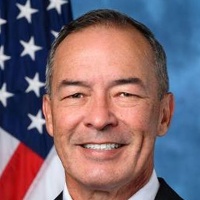
James (Jim) Moylan
Representative
GU
This bill amends the Defense Base Act to formally exclude Guam from its coverage requirements. By updating the Act’s definitions, the legislation ensures that the federal workers' compensation program for civilian employees on military bases no longer applies to work performed in the territory.
Guam Carved Out of Federal Defense Base Act: Civilian Contractors Face Workers' Comp Shake-up
This bill makes a surgical strike on the Defense Base Act (DBA), a federal law that ensures civilian workers on military bases get workers' compensation if they are injured on the job. By amending Section 1(b) of the Act, the legislation explicitly removes Guam from the list of covered territories. If this passes, any civilian employee working on a military installation or under a federal contract in Guam will no longer be protected by the federal DBA framework, effectively shifting the responsibility for injury coverage away from the federal standard and into a different, likely local, legal bucket.
The Shift in Safety Nets
For a decade, if you were a mechanic or an IT specialist working on a base in Guam, the DBA was your safety net. It mandated that your employer provide insurance for medical care and disability if you got hurt. This bill changes the definition of 'Territory or possession outside the continental United States' to specifically exclude Guam (Section 1(b)(5)). For a construction worker on a hangar project, this means the federal guarantee of benefits—which are often more robust than local alternatives—evaporates. The bill doesn't set up a replacement system; it simply removes the federal requirement, leaving workers dependent on whatever local Guam statutes or private insurance policies might be in place.
Business Costs vs. Worker Security
From a business perspective, the move is a major cost-cutter. Federal DBA insurance is notoriously expensive because it covers high-risk environments. By pulling Guam out of the DBA, contractors and small businesses operating on the island will likely see their insurance premiums drop significantly. This could make bidding on federal contracts more competitive and lower the overall cost of military projects in the region. However, the trade-off is direct: the money saved by employers is essentially a removal of the guaranteed federal payout for an injured employee. For a local business owner in Tamuning, this might mean more breathing room in the budget, but for their employees, it means navigating a less certain path if they face a career-ending injury.
A Localized Future
This change forces Guam to stand on its own regarding industrial accidents on military land. While the bill simplifies the regulatory landscape by removing federal oversight, it creates a potential gap in coverage. Since the DBA is a 'no-fault' system designed to prevent long-drawn-out lawsuits, its removal could lead to more litigation in local courts if workers feel their local compensation isn't enough to cover their medical bills. We are looking at a transition from a uniform federal standard to a localized approach that favors lower overhead for companies but places the burden of risk squarely on the shoulders of the island's civilian workforce.