This Act authorizes federal funding and cooperation for the planning, construction, and operation power supply of the Dry-Redwater Regional Water Authority System to ensure water supply for specified counties in Montana and North Dakota.
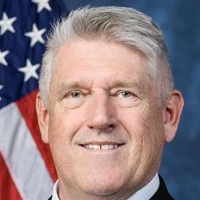
Troy Downing
Representative
MT-2
The Dry-Redwater Regional Water Authorization Act authorizes the construction of a regional water system to ensure an adequate water supply for several counties in Montana and North Dakota. The Secretary of the Interior will partner with the Dry-Redwater Regional Water Authority, with the federal government covering up to 75% of the planning, design, and construction costs. The Act also requires the Western Area Power Administration to supply necessary electrical power for the system's operation. This legislation explicitly preserves all existing state water laws and management authority.
New $602 Million Water Project to Bring Reliable Supply to Rural Montana and North Dakota Through 2037.
The Dry-Redwater Regional Water Authorization Act is a massive infrastructure play designed to fix a basic but critical problem: getting clean, reliable water to the rural stretches of Eastern Montana and Western North Dakota. Specifically, it targets Dawson, Garfield, McCone, Prairie, and Richland Counties in Montana, along with a slice of McKenzie County in North Dakota. The bill authorizes the Secretary of the Interior to partner with a local nonprofit authority to build out a regional system of pipelines, treatment plants, and pumping stations. The federal government is putting up the lion’s share of the cash, covering up to 75% of the construction costs, with a total funding cap set at $602 million through fiscal year 2037.
Tapping Into New Infrastructure
This isn’t just about laying a few pipes; it’s a full-scale overhaul of how water moves in the region. Under Section 4, the bill allows federal funds to be used for everything from high-tech water treatment facilities and storage tanks to the access roads and power lines needed to keep them running. For a family in McCone County who currently relies on a private well that might be failing or contaminated, this means finally hooking up to a stable, public system. It also ensures that livestock owners aren't left out in the cold—the bill specifically states that water use cannot be restricted to just small-scale or 'incidental' livestock watering, which is a huge win for the local ranching economy.
The Power to Move Water
Moving millions of gallons of water across rugged terrain requires a lot of electricity, and the bill addresses this by tapping into the Pick-Sloan Missouri River Basin Program. Because McCone and Garfield Counties were impacted decades ago by the construction of the Fort Peck Dam, the bill treats this new water system as a form of 'impact mitigation.' This means the Western Area Power Administration has to provide the electricity needed to run the pumps and treatment plants at a 'firm power' rate—essentially a stable, wholesale price. While the local Water Authority has to pay for the power and any necessary upgrades to the electrical grid, getting access to this specific power source helps keep the long-term utility costs from skyrocketing for the end consumer.
The Fine Print on Your Water Bill
While the federal government is picking up 75% of the tab to build the system, Section 4(f) makes it very clear that Uncle Sam is not paying for the upkeep. Once the ribbons are cut, the Dry-Redwater Regional Water Authority takes full ownership and responsibility. This means the costs for daily operations, routine maintenance, and eventual repairs will fall entirely on the local authority—and, by extension, the people paying the monthly water bills. Additionally, because the bill allows for funding adjustments based on 'market volatility' and construction cost indexes, the final price tag for construction could shift depending on the price of steel and labor over the next decade.
Respecting Local Borders
For those worried about federal overreach into local resources, Section 6 acts as a legal firewall. It explicitly states that nothing in this Act overrides state water laws or the authority of Montana and North Dakota to manage their own water rights. The project is designed to work within the existing legal framework of the states, ensuring that while the federal government is providing the funding and the power, the actual control over the water remains local. It’s a straightforward trade: federal investment in exchange for long-term regional stability, provided the local communities can handle the bill for keeping the lights on and the water flowing.