This bill expands the ban on foreign money in U.S. elections with new reporting and enforcement rules while simultaneously restricting the federal government's collection and disclosure of donor information for tax-exempt organizations.
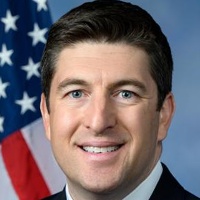
Bryan Steil
Representative
WI-1
This act significantly expands the existing ban on foreign money used in U.S. elections, covering activities like voter registration and get-out-the-vote efforts, and introduces new certification and enforcement rules. It also restricts federal government entities from collecting or publicly releasing donor information for most tax-exempt organizations. The legislation aims to strengthen election integrity by tightening campaign finance rules against foreign influence while protecting domestic donor privacy.
New Bill Expands Foreign Money Ban in Elections, Adds Donor Privacy Rules
Alright, let's talk about the 'Preventing Foreign Interference in American Elections Act.' This bill is a two-for-one deal: it’s looking to tighten up the rules on foreign money in our elections while also putting some new boundaries on how the government handles donor information for non-profits. It's hitting the streets with some pretty specific changes that could affect everything from political campaigns to your favorite charity.
Expanding the 'No Foreign Money' Zone
First up, this bill is basically telling foreign nationals, "Hands off our elections, even more so." The existing ban on foreign money in U.S. elections is getting a serious upgrade. Currently, foreign nationals can't directly contribute to campaigns. This bill, under Section 2, broadens that to explicitly include activities like voter registration, collecting ballots (yes, that's a thing), and even "get-out-the-vote" drives. So, if a foreign entity tries to fund a local group knocking on doors to remind people to vote, that's now explicitly in the no-go zone. It also covers any public communication that names a political party or relates to election administration. Basically, if it touches an election, and it's foreign money, the bill says, "Nope." This is a big deal for election integrity, aiming to prevent outside influence from seeping into the grassroots level of our political process.
What's interesting here is the new focus on "indirect contributions." If you give money to someone with a specific instruction that it must be used for one of these now-banned activities, it's treated as an indirect foreign contribution. This is an attempt to close loopholes where foreign money might try to sneak in through a middleman. For political committees and anyone spending big on elections, they'll now have to include a sworn certification in their reports saying they've played by these new foreign money rules. Think of it like signing a legal affidavit every time you file your taxes, but for campaign finance.
FEC Investigations and the 'Certification Loophole'
Now, here's where it gets a bit spicy, especially for those of us who like to see robust oversight. Section 2 also tweaks how the Federal Election Commission (FEC) handles investigations into these foreign money violations. If someone's accused, they can submit a sworn certification (under penalty of perjury) stating they didn't violate the rules. The FEC must consider this certification. More critically, any FEC investigation must be "limited to the factual matters necessary to determine whether that specific alleged violation happened." If an investigation seems to go beyond that, the person under investigation can petition a federal court to quash the subpoena. This part could be a double-edged sword. On one hand, it protects individuals from overly broad inquiries. On the other, it might tie the FEC's hands, making it tougher to uncover broader schemes or patterns of foreign interference if they can't follow leads beyond the initial specific accusation. It's like telling a detective they can only investigate the specific car theft, but not look into the chop shop they stumble upon during that investigation.
Donor Privacy for Non-Profits: A Shield or a Shroud?
Then we pivot to Section 3, which is all about protecting the privacy of donors to tax-exempt organizations – think charities, advocacy groups, and the like. This section generally says federal agencies can't collect or publicly disclose information that identifies donors to these groups. This is a big win for organizations that value donor privacy, potentially encouraging more giving by assuring donors their names won't be made public by the government. Imagine you donate to a local food bank; under this, the government couldn't just demand or release your name unless specific exceptions apply.
However, there are exceptions. The IRS can still collect this info for tax purposes, and the FEC can for certain election-related activities. Also, if a court orders it, information can be collected or disclosed. But outside of these specific carve-outs, federal employees who willfully disclose donor information could face serious penalties: up to a $250,000 fine, five years in prison, and losing their job. This part is a clear message that donor privacy is being taken seriously. The catch here is that while it protects privacy, it could also make it harder for watchdog groups or the public to scrutinize the funding behind some non-profits, especially those involved in advocacy, if that funding isn't directly election-related and thus not under FEC purview. It’s a balance between privacy and transparency, and this bill leans heavily towards privacy for non-profit donors.
What It Means for You
So, what's the takeaway? If you're involved in any political activity, even volunteering for voter registration, and you're dealing with funds, you'll need to be hyper-aware of where that money is coming from. If you donate to a non-profit, your privacy just got some stronger federal protections. This bill is trying to make our elections cleaner from foreign influence, which is something most people can get behind. But it also introduces some new complexities in enforcement and a significant shift in how donor information for non-profits is handled by federal agencies. It’s a classic policy trade-off: increased protection in one area, with potential limitations or reduced transparency in another.