This act establishes a rebuttable presumption favoring the authorization for service members to carry personal firearms on military installations when off-duty.
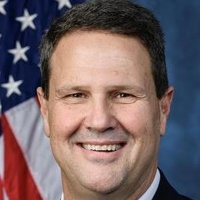
Jeff Crank
Representative
CO-5
This bill establishes a rebuttable presumption that members of the Armed Forces should be authorized to carry personal firearms on military installations when off-duty. It amends existing law to require that requests for authorization begin with the assumption of approval. Any denial must be provided in writing and include specific, objective reasons.
Military Bases to See More Personal Firearms: New Bill Creates 'Presumption' for Off-Duty Carry
Alright, let's talk about something that hits close to home for a lot of folks in uniform and their families. There's a new bill, the “Armed Forces Carry Rights Protection Act of 2026,” making its way through the legislative maze. If it passes, it's going to shake up how personal firearms are handled on military installations.
The New Default: Carry On (Mostly)
Right now, if you're a service member and you want to carry your personal firearm on base when you're off-duty, it's often an uphill battle. This bill flips that script. It creates what's called a "rebuttable presumption" in favor of authorizing you to carry that personal firearm. Think of it like this: the default answer becomes "yes," unless there's a really good reason for it to be "no." This is a pretty significant shift from how things have often been handled, putting the onus on the military leadership to justify a denial, rather than on the service member to justify their request. This change is specifically amending Section 526 of the National Defense Authorization Act for Fiscal Year 2016, so it's building on existing law.
No More Vague 'Nos': Denials Must Be Detailed
One of the biggest headaches for service members seeking to carry firearms has been the lack of clear reasons for denials. This bill aims to fix that. If your request to carry a personal firearm is denied, the powers-that-be can't just give you a shrug and a generic "no." The denial must be in writing and include an "objective, clearly describable, and individualized reason" for why you're not getting the authorization. This means no more vague, one-size-fits-all rejections. For someone like a construction worker on base, who might have a specific need or preference for carrying, this could mean getting a real explanation instead of a bureaucratic brick wall. However, that phrase "objective, clearly describable, and individualized reason" is still a bit squishy. What one commander sees as objective, another might not, potentially leading to some inconsistent rulings across different bases or even within the same command.
Who Benefits and Who's Watching?
So, who's cheering for this? Definitely service members who value their Second Amendment rights and want to feel safer, even on base. It gives them more leverage and transparency in the process. Advocates for gun rights will also see this as a win. On the flip side, military security personnel might be looking at increased challenges. More personal firearms on base, even if carried by trained service members, adds a layer of complexity to their job of maintaining overall safety and security. There's also the concern from individuals who believe that increasing firearm access, even for military personnel, could introduce new risks. The bill doesn't lay out a clear oversight mechanism for these denials, so it'll be interesting to see how consistently that "objective reason" standard is applied in practice across different installations. For a small business owner on base, or even just someone working at the commissary, the presence of more personal firearms might change their sense of day-to-day security, for better or worse, depending on their perspective.