This legislation appropriates fiscal year 2027 funding for national security, the Department of State, and foreign assistance programs, while also establishing new federal requirements for voter registration and identification.
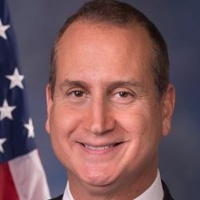
Mario Diaz-Balart
Representative
FL-26
The **National Security, Department of State, and Related Programs Appropriations Act, 2027** provides federal funding for national security, foreign diplomacy, international aid, and global development programs for the 2027 fiscal year. Additionally, the bill includes the **SAVE America Act**, which mandates documentary proof of U.S. citizenship for federal voter registration and requires voters to present photo identification in federal elections. Together, these measures establish both foreign policy spending priorities and new federal requirements for election integrity.
| Party | Total Votes | Yes | No | Did Not Vote |
|---|---|---|---|---|
Democrat | 212 | 1 | 208 | 3 |
Republican | 219 | 216 | 1 | 2 |
2027 State Department Bill Pairs $55 Billion in Global Aid with Major New Voter ID Requirements
The federal government is looking to set its global budget for 2027, and the National Security and State Department Appropriations Act is the heavy hitter doing the work. This bill isn't just about diplomacy and foreign aid; it’s a massive funding package that also hitches a ride for the "SAVE America Act," which would fundamentally change how you register to vote and cast a ballot in federal elections. Between billions for international security and a complete overhaul of voter registration rules, there is a lot to unpack for anyone who pays taxes or plans to vote in the coming years.
The Global Checkbook: From Passports to Peacekeeping
If you’ve ever waited months for a passport, this bill has some news for you. It allocates $533 million specifically to tackle the backlog of visa and passport applications. Beyond our borders, the bill sets aside $9.76 billion for the State Department’s daily operations and security, plus $5.53 billion to fight HIV/AIDS globally. For those who follow Middle East policy, the bill locks in $3.3 billion for military grants to Israel, $1.65 billion for Jordan, and $1.425 billion for Egypt. However, it’s not just a blank check; the bill includes strict "no-go" zones, prohibiting funds from going to the Green Climate Fund or any organization the President deems involved in coercive abortion. It also bans aid to the UNRWA and several foreign governments like Russia and Iran, while setting up a $500 million fund specifically for Taiwan’s defense.
The SAVE America Act: New Rules for the Polls
While the first half of the bill looks abroad, Division B—the Safeguard American Voter Eligibility Act—focuses squarely on your local polling place. If this passes, you’ll need to provide "documentary proof of citizenship" to register for federal elections. We’re talking a U.S. passport, a birth certificate paired with a photo ID, or a REAL ID that specifically notes citizenship. For a busy person who might have lost their original birth certificate or doesn't own a passport, this adds a significant errand to the registration process. The bill also mandates that states cross-reference their voter rolls with Department of Homeland Security databases to purge non-citizens, and it requires in-person voters to show a physical photo ID. If you vote by mail, you’d need to include a copy of your ID or the last four digits of your Social Security number along with an affidavit.
Accountability and the Fine Print
To keep all this money and new regulation in check, the bill provides over $186 million for Inspectors General to audit where the cash is actually going. It also includes a "free speech" provision that stops the State Department from using funds to pressure social media companies to deplatform or demonetize lawful U.S. speech. However, the implementation of the new voting rules could be a logistical hurdle. The bill requires government buildings like libraries and police stations to provide free access to copying equipment so voters can copy their IDs for mail-in ballots. For state officials, the clock will be ticking: federal agencies are required to verify citizenship data for states within 24 hours at no charge. Whether these systems can handle that speed without errors—like accidentally flagging a naturalized citizen as ineligible—remains one of the biggest practical questions for this legislation.