The American Leadership in AI Act aims to strengthen U.S. leadership in artificial intelligence by establishing new standards, boosting research infrastructure, modernizing federal governance, protecting workers and small businesses, safeguarding against deepfakes, and expanding AI education and literacy.
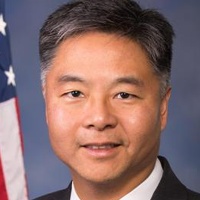
Ted Lieu
Representative
CA-36
The American Leadership in AI Act aims to secure U.S. leadership in artificial intelligence by strengthening safety standards, boosting federal research infrastructure, and modernizing government use of AI. The bill also focuses on protecting workers and small businesses from AI disruption while expanding education and penalizing harmful AI-enabled misuse like deepfakes. Overall, it establishes a comprehensive framework to foster innovation while mitigating risks associated with advanced AI.
New AI Bill Tackles Deepfakes, Boosts Small Biz, and Standardizes Government Tech
Alright, let's talk about the American Leadership in AI Act, because this one’s a big deal if you're living in 2024 and beyond. This bill is basically the government's comprehensive plan to get a handle on artificial intelligence, aiming to make sure the U.S. stays ahead in the AI race while also trying to keep things safe and fair for regular folks.
What's Under the Hood?
At its core, this bill sets up a whole new framework for how AI gets developed, governed, and how we, as a workforce, adapt to it. Think of it as a multi-pronged approach: it wants to strengthen AI standards, pour resources into research, modernize how federal agencies use AI, protect workers and small businesses, fight against harmful deepfakes and fraud, and ramp up AI education and literacy across the board. It's an ambitious list, trying to hit everything from the lab to your living room.
Making AI Play Nice: Standards and Safety
One of the first things this bill does is create a Center for AI Standards and Innovation at the National Institute of Standards and Technology (NIST). This isn't just some dusty government office; it's designed to be the hub for making sure AI systems are reliable, safe, and secure. Imagine it like a Consumer Reports for AI, but for developers. They'll be researching, developing, and evaluating AI, all with the goal of ensuring the AI tools we interact with — whether it's in our cars, our healthcare, or our banking apps — are actually trustworthy.
Now, for those of you who might be thinking, "Great, more government red tape," the bill does try to balance this. It sets up a pilot program to bring international AI standards meetings to the U.S., offering grants to cover half the costs. The idea is to make sure America has a strong voice in shaping global AI rules, which is pretty crucial given how fast this tech is moving. Plus, there's a publicly accessible web portal in the works to keep everyone, especially smaller companies, in the loop on these evolving standards. The bill explicitly states that information shared with this Center can't be used to regulate the entity that shared it, and no new enforcement authority is created, aiming to foster collaboration over coercion. That’s a key detail, especially for startups and small businesses who might be wary of sharing their secret sauce.
Fueling the AI Brain Trust
Ever wonder how cutting-edge AI research gets done? This bill wants to democratize that. It establishes a National Artificial Intelligence Research Resource (NAIRR). What does that mean for you? It's basically a big pool of computing power, data, and AI training tools that researchers, educators, and even students can tap into. The goal is to ensure that AI innovation isn't just locked away in big tech companies or elite universities. So, if you're a bright student at a community college or a small business trying to innovate, you might actually get access to the kind of resources that used to be out of reach. The National Science Foundation is even tasked with partnering with leading tech companies to provide some of these resources, leveraging private sector muscle rather than building everything from scratch with taxpayer dollars.
Beyond just access, the bill also throws some serious cash at AI research. We're talking prize competitions with at least $1 million for breakthroughs in national security, health, and energy. Think of it like a tech Olympics for AI. There are also specific grants for using generative AI in healthcare, particularly for projects that reduce clinician burnout and improve care for underserved communities. If you've ever waited ages for a doctor's appointment or dealt with mountains of medical paperwork, this could mean faster diagnoses or less administrative hassle, potentially leading to lower costs in the long run. It also coordinates AI research between the Department of Agriculture and the National Science Foundation, aiming to bring AI solutions to farming and food security – which could eventually mean more stable food prices for your grocery bill.
Government Gets Its AI Act Together
Let's be honest, government agencies aren't always known for being on the bleeding edge of tech. This bill aims to change that by modernizing federal AI governance. It requires NIST to set minimum standards for AI systems used by federal agencies and their contractors. This is a big deal because it means that any AI the government uses – whether it's for processing your taxes, managing benefits, or in law enforcement – should meet a baseline for safety and reliability. No more wild west AI in public services, ideally.
Every federal agency will also have to appoint a Chief Artificial Intelligence Officer (CAIO) within 45 days. This person is the go-to for all things AI in their agency, providing a clear point of accountability. If an AI system messes up, you'll know who's responsible. There's also a new council for these CAIOs to coordinate policies across the government, hopefully preventing agencies from reinventing the wheel or, worse, contradicting each other. Agencies will also need to classify AI uses by risk level and identify which AI applications should be banned entirely. This forces a critical look at how AI might impact privacy, civil rights, and livelihoods before it's deployed.
Protecting Your Paycheck and Your Privacy
This bill doesn't just focus on the tech; it also looks at how AI affects you. It creates an AI Workforce Research Hub within the Department of Labor to study how AI is changing jobs and wages. For workers, this means policymakers will have better data to figure out what kind of training and support is needed as AI reshapes the economy. If you're worried about your job being automated, this hub is supposed to provide insights into where the new opportunities are and what skills are needed.
For small businesses, the bill requires NIST to develop easy-to-use resources to help them understand and adopt AI. If you run a local shop or a small construction company, you often don't have the IT budget of a Fortune 500 firm. These resources – case studies, best practices, educational materials – are designed to level the playing field, helping smaller players use AI to compete. The bill also includes tax credits for cybersecurity training, covering 50% of employee costs up to $5,000 per year. This could be a real boon for small and mid-sized businesses looking to upskill their teams without breaking the bank, though the $5,000 cap might be a bit tight for larger teams needing extensive training.
Now, for something that hits closer to home for many: deepfakes and fraud. The bill creates a new federal right for individuals to sue anyone who knowingly creates or shares intimate deepfakes without consent. Victims could recover between $150,000 and $250,000 in damages, plus actual losses. This is a critical step, as current laws often struggle with the insidious nature of AI-generated fake intimate images. However, there's a catch: the deepfake has to be "indistinguishable from an authentic image." That's a high bar, and it might leave some victims out in the cold if their deepfake isn't perfectly convincing. The bill also increases penalties for financial crimes and impersonating federal officials when AI is involved, recognizing that AI makes it easier for criminals to scale their scams. If you've ever gotten a convincing-looking phishing email or scam call, you know how sophisticated these can be.
Finally, the bill protects AI whistleblowers. If you work in AI and see something unsafe or unethical, you can report it to the government or Congress without fear of being fired or demoted. This is a big deal because employees are often the first to spot dangerous flaws, and this gives them legal recourse if their employer tries to retaliate.
Building an AI-Savvy Society
The bill also makes a strong push for AI education and literacy. It creates grant programs for developing K-12 AI literacy curricula and teacher training, recognizing that our kids need to understand AI to navigate the future. There are new scholarships and fellowships for college students studying AI, with a focus on fields like manufacturing and agriculture. And to ensure that AI training isn't just for four-year degree holders, it funds up to eight Community College and Career Technical Education Centers of AI Excellence. This means workers without traditional university degrees can still get the skills needed for good-paying AI jobs. It also prioritizes grants for historically Black colleges, minority-serving institutions, and Tribal colleges, aiming to spread AI resources beyond just the elite research universities.
The Bottom Line
This bill is a massive undertaking, trying to get ahead of AI's rapid development rather than playing catch-up. For you, this could mean safer AI products, better protection against digital scams, and new opportunities for education and career growth. However, there are still some question marks. The voluntary nature of the AI incident reporting system means its effectiveness hinges on widespread participation. And while the deepfake protections are a step forward, that "indistinguishable" clause could be a hurdle for some victims. For small businesses, while resources are offered, the initial investment in adopting AI could still be a pinch point. As with any sweeping legislation, the real impact will be in the implementation, but this bill certainly lays out a comprehensive roadmap for the AI-driven future.