The Books Save Lives Act mandates that federally funded libraries maintain diverse collections and establishes civil rights protections against the discriminatory removal of books representing underrepresented communities.
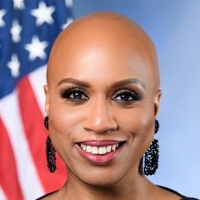
Ayanna Pressley
Representative
MA-7
The Books Save Lives Act mandates that federally funded schools and public libraries maintain diverse book collections and employ trained library staff. It establishes a civil rights enforcement mechanism to address the discriminatory impact of book bans and requires a federal report on the effects of such campaigns on underrepresented communities.
Books Save Lives Act Mandates Diverse Library Collections and Professional Staffing in Schools
The Books Save Lives Act aims to cement the presence of diverse literature in public institutions by requiring federally funded libraries and schools to maintain collections that represent underrepresented communities. Beyond just stocking shelves, the bill mandates that every elementary and secondary school receiving federal funds must have a trained librarian on staff (Section 2). This move shifts library management from a part-time or volunteer task to a professional requirement, ensuring that students have expert guidance in navigating educational resources.
New Rules for the Bookshelf
Under this legislation, libraries can’t just have a few tokens of diversity; they are required to maintain collections featuring authors, illustrators, or subjects from underrepresented groups. This includes racial and ethnic minorities, the LGBTQ+ community, religious minorities, and people with disabilities (Section 4). For a parent, this means their child’s school library is legally required to reflect the broader world. For a librarian, it means the job description now includes a federal mandate to curate a collection that is intentionally inclusive, backed by the weight of civil rights law.
The 'Disparate Impact' Test
The bill introduces a significant legal shift in how book removals are handled. If a school or public library pulls a book from its shelves, and that removal has a 'disparate impact' on books by or about underrepresented communities, it counts as prima facie evidence of discrimination (Section 2). In plain English: if a local board decides to clear out a specific category of books, they aren't just making a local policy choice—they are potentially triggering a federal civil rights violation under the Civil Rights Act or the ADA. This gives families and advocacy groups a direct legal path to challenge book bans in court without having to prove 'intent,' only the resulting impact.
Tracking the Trend
To get a clearer picture of the current landscape, the bill tasks the Comptroller General with delivering a report within 180 days on how recent book ban campaigns have affected specific communities (Section 3). This moves the conversation from anecdotal social media debates to a data-driven government analysis. While this provides transparency, the medium-level vagueness around what exactly constitutes a 'disparate impact' in a library setting means that local administrators and school boards will likely face a period of trial and error—and potentially litigation—as they navigate the line between standard collection weeding and illegal discrimination.