The GUARD Act revokes the tax-exempt status of 501(c)(3) and 501(c)(4) organizations that receive contributions from citizens or nationals of designated foreign adversary nations.
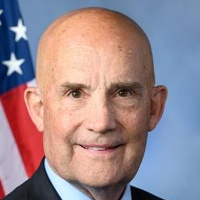
Keith Self
Representative
TX-3
The GUARD Act seeks to protect U.S. non-profits from foreign influence by amending the Internal Revenue Code to revoke the tax-exempt status of 501(c)(3) and 501(c)(4) organizations that accept contributions from citizens or nationals of designated foreign adversaries. This legislation aims to enhance national security by ensuring that charitable and social welfare organizations are not utilized as conduits for foreign interests.
GUARD Act Mandates Permanent Loss of Tax-Exempt Status for Non-Profits Receiving Any Donation from Foreign Adversary Nationals.
The GUARD Act introduces a 'one-strike' policy for American non-profits, including 501(c)(3) charities and 501(c)(4) social welfare groups. Under Section 2, any organization that accepts a gift or contribution from a citizen or national of a designated 'foreign adversary' will permanently lose its tax-exempt status starting that year. The bill specifically names China (including Hong Kong and Macau), Cuba, Iran, North Korea, and Russia as adversaries, while giving the Secretary of the Treasury broad authority to add other countries to the list at any time.
The 'One-Dollar' Trap
This legislation contains no 'de minimis' threshold, meaning there is no minimum dollar amount required to trigger the penalty. In the real world, this means a local community center or a university alumni association could lose its tax-exempt status over a $25 online donation if the donor happens to be a national of a listed country. For a small non-profit, this doesn't just mean paying corporate income taxes; it means donors can no longer deduct contributions from their own taxes, which effectively chokes off the organization's primary lifeline. Because the bill applies to 'nationals,' it could also create a vetting nightmare for organizations with international members or dual-citizen donors living in the U.S.
Broad Powers and Administrative Hurdles
The bill grants the Secretary of the Treasury, in consultation with the Secretary of State, the power to designate any country as a foreign adversary if it is deemed in the 'national security interest.' This creates a high level of uncertainty for humanitarian groups working in volatile regions. For example, if a medical relief charity receives funding from a doctor in a country that is suddenly added to the adversary list, that charity could face immediate and permanent tax revocation. Unlike many tax laws that allow for corrections or 'good faith' exceptions, the GUARD Act’s language is absolute, offering no clear path for an organization to regain its status once a donation is processed.
Risks of Financial Sabotage
Because the penalty is so severe and the trigger is so small, the bill opens the door for potential 'sabotage' donations. A bad actor could theoretically make a small, unsolicited donation to a non-profit they dislike specifically to trigger an IRS investigation into their tax-exempt status. For busy professionals who sit on the boards of local charities or religious organizations, this bill shifts the burden of international geopolitical screening onto volunteers and small-staffed offices. Without a massive upgrade in donor-screening technology, many organizations may find themselves choosing between turning away all international support or risking their entire financial future.