This bill mandates that foreign agents disclose any financial or operational ties between their foreign principals and specific foreign governments on all informational materials.
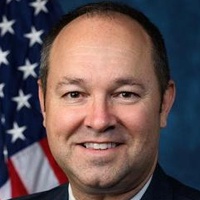
Marlin Stutzman
Representative
IN-3
The Foreign Propaganda Transparency Act strengthens the Foreign Agents Registration Act by mandating greater transparency for informational materials distributed in the U.S. It requires foreign agents to explicitly disclose if their principals are supervised, financed, or controlled by specific foreign governments or "covered nations." This legislation ensures the public is better informed about the origins and potential state-backing of foreign-distributed content.
Foreign Propaganda Transparency Act Mandates Clear Labels on Media Linked to Adversarial Nations
The Foreign Propaganda Transparency Act introduces a major update to the Foreign Agents Registration Act (FARA) by requiring foreign agents to pull back the curtain on who is actually paying for their messaging. Under Section 2 of the bill, any informational materials—think digital articles, pamphlets, or social media campaigns—distributed by a foreign agent must now include a 'conspicuous statement' if the source is tied to a 'covered nation.' This isn't just a generic disclaimer; the bill specifically targets entities that are supervised, directed, owned, controlled, or even partially subsidized by governments often viewed as strategic competitors, such as those defined in 10 U.S.C. 4872(f)(2). For the average person scrolling through news or watching an online documentary, this means the fine print will now explicitly state if a foreign government is footing the bill behind the scenes.
Labeling the Source
This bill essentially acts as a 'nutrition label' for political and informational content. If a media outlet or a consulting firm is acting on behalf of a foreign principal, they are already required to register, but this legislation adds a layer of specific detail regarding the nature of that relationship. For example, if you are a freelance journalist or a digital marketing specialist working for a firm that receives subsidies from a 'covered nation,' Section 2 requires you to disclose that financial or supervisory link directly on the materials you distribute. This prevents foreign entities from using front organizations to mask their involvement, ensuring that when a report or video lands in your inbox, you know exactly whose interests are being represented before you hit play.
The Covered Nation Connection
The real-world impact hits hardest for organizations and agents operating within the U.S. that maintain complex ties to foreign governments. By referencing 10 U.S.C. 4872(f)(2), the bill narrows its focus to specific countries—typically including China, Russia, North Korea, and Iran—meaning agents for these nations can no longer rely on vague disclosures. If a local community group or a trade association receives funding or direction from an entity acting on behalf of one of these governments, they must state that connection clearly. While this increases the administrative load for these agents, it aims to provide the public with immediate context, much like how a political ad must state who paid for it, helping citizens distinguish between independent analysis and state-sponsored influence.