The STOP Corrupt Bets Act of 2026 prohibits the trading of event contracts related to elections, government actions, sports, and military activities on registered entities while mandating a GAO study on prediction markets.
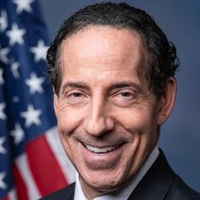
Jamie Raskin
Representative
MD-8
The STOP Corrupt Bets Act of 2026 prohibits the trading of event contracts related to political elections, government actions, sporting events, and military activities on registered exchanges. The bill aims to prevent gambling-like speculation in prediction markets while allowing exceptions for legitimate commercial hedging. Additionally, it mandates a GAO study to analyze the risks of prediction markets and provide recommendations for maintaining market integrity.
STOP Corrupt Bets Act of 2026 Bans Financial Gambling on Elections and Military Action
The STOP Corrupt Bets Act of 2026 draws a hard line in the sand between financial investing and straight-up gambling. Under this bill, registered trading platforms are prohibited from offering 'event contracts'—essentially bets—on the outcome of political elections, federal government actions, sporting events, or military operations. By amending the Commodity Exchange Act, the bill aims to keep the gears of democracy and the chaos of war from becoming a casino for speculators. If you’ve seen apps where people put money on who will win the next presidency or whether a bill will pass the Senate, this legislation is designed to shut those markets down on official U.S. exchanges.
Drawing the Line on 'Hedging'
While the bill blocks general betting on government actions, it includes a specific 'Hedging' exception in Section 2. This means if a business can prove they are using a contract to mitigate a legitimate commercial risk—for example, a construction company protecting itself against a sudden change in federal infrastructure spending—the Commodity Futures Trading Commission (CFTC) can allow it. However, for everyone else, the bill directs the CFTC to be the gatekeeper, ensuring that our financial regulatory system doesn't turn into a playground for high-stakes gambling that could potentially influence or corrupt the very events being bet on.
Protecting the Next Generation of Traders
Section 4 of the bill pulls the GAO (Government Accountability Office) into the mix, requiring a deep-dive study on prediction markets within 60 days. A major focus of this study is the impact on 18-to-20-year-olds who are increasingly using these digital platforms. The government wants to know how insider trading works in these markets and whether young adults are being lured into risky speculative behavior under the guise of 'investing.' This isn't just about rules; it’s about understanding the digital-native trading culture and making sure that market integrity isn't sacrificed for a quick payout on a headline.
What This Means for Your Wallet and Your Vote
For the average person, this bill acts as a firewall between your civic life and the volatility of the markets. By banning bets on military actions and elections, the bill seeks to prevent situations where someone might have a financial incentive to see a conflict escalate or an election result manipulated. While professional speculative traders and prediction market operators will see their playbooks shrink, the bill preserves the rights of states to regulate their own gambling laws (Section 3). It’s a move to ensure that when you look at the news, you’re seeing the results of policy and competition, not the results of a point spread.