The RESCUE Act establishes a strategy and imposes sanctions to end U.S. reliance on Russia's Rosatom nuclear energy sector due to the war in Ukraine.
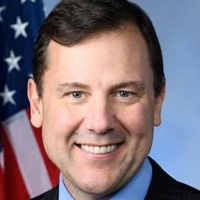
Thomas Kean
Representative
NJ-7
The RESCUE Act establishes a U.S. policy to end reliance on Russia's state nuclear energy corporation, Rosatom, due to the war in Ukraine. It mandates sanctions against Rosatom and foreign entities dealing with it, while requiring the President to develop a strategy to decouple the U.S. from Russian nuclear energy. The bill also requires a report assessing the impact of the existing U.S.-Russia nuclear cooperation agreement.
New RESCUE Act Targets Rosatom, Aims to Cut Russia Out of Global Nuclear Energy by 2031
Alright, let's talk about the RESCUE Act – that's the Rosatom Energy Sanctions Compliance and Unified Enforcement Act. This bill is basically Uncle Sam saying, “Enough is enough” to Russia’s state-owned nuclear energy giant, Rosatom, especially after what’s happening in Ukraine. The big idea here is to yank the U.S. and its allies off Rosatom’s nuclear energy grid and cut off a revenue stream for the Russian government, aiming to get this done by 2031.
Detangling from Rosatom
First up, the bill lays out a clear policy: the U.S. wants to end its reliance on Rosatom. This isn't just talk; it requires the President to cook up a detailed strategy within 180 days of the bill becoming law, and then update it annually for the next four years. This strategy needs to map out how the U.S. will permanently decouple from Russia's nuclear industry and, crucially, how it will help allies find new nuclear energy suppliers. Think of it like a massive global energy infrastructure project, but with a ticking clock. It also has to figure out how to replace Rosatom for critical reactor safety and operation services, which is a huge deal for countries currently running Russian-designed reactors.
Sanctions: The Financial Squeeze Play
Here’s where it gets real for Rosatom and anyone doing business with them. The RESCUE Act mandates sanctions on any foreign person (that’s anyone not a U.S. citizen or entity) operating in Russia's nuclear sector and controlled by the Russian government. It also targets foreign entities that, after this bill passes, sign new contracts for Russian-built reactors, engage in “significant transactions” related to them, or provide construction services. These sanctions kick in 180 days after the law is enacted, basically freezing any U.S.-based property or assets belonging to these entities. The President can also tell foreign banks to stop doing business in the U.S. if they’re caught helping sanctioned entities.
Now, about those “significant transactions” and “construction services” mentioned in Section 4(a)—the bill doesn't spell out exactly what those mean. This vagueness could be a double-edged sword: it gives the President flexibility to adapt to new situations, but it also means there’s some wiggle room for interpretation. For a business owner trying to navigate international trade, that kind of ambiguity can be a headache, making it tough to know exactly where the line is drawn.
Waivers and Exceptions: The Fine Print
Even with tough sanctions, there are some practical realities. The bill includes a few key waivers. The President can waive sanctions for 180-day periods if it’s deemed in the U.S. national security interest. This “national security waiver” (Section 4(f)(1)) is pretty broad, and while it’s there for good reason, it means the full force of the sanctions could be dialed back if the situation calls for it. There’s also a specific waiver for medical and industrial isotopes—essential stuff for hospitals and factories. If the U.S. can't meet its own needs for these isotopes without Rosatom, sanctions on those specific transactions can be waived for up to seven years, provided the U.S. is actively trying to build alternative supply chains. This is a smart move to prevent disruptions in critical healthcare and industrial sectors, but it highlights how deeply intertwined global supply chains are.
Sanctions also won't apply to things like U.N. business, authorized U.S. intelligence activities, or activities absolutely necessary for the safe operation of nuclear reactors where no alternative suppliers exist. And good news for your grocery bill: agricultural commodities, food, medicine, and humanitarian aid are also exempt.
The Long Game: Ending Sanctions and Oversight
Ending these sanctions isn't simple. For sanctions on Rosatom to be lifted, Russia has to completely stop hostilities in Ukraine, withdraw all forces, and restore Ukraine’s territory to its 2014 borders. Plus, Rosatom can't be misusing U.S.-origin nuclear material at the Zaporizhzhia Nuclear Power Plant, or funding Russia’s occupation. Russia also needs to be compliant with nuclear treaties and not be contributing to nuclear weapons programs elsewhere. This clearly sets a high bar for Russia to meet.
On the oversight front, Congress wants to keep a close eye on things. Section 5 requires the President to respond to congressional requests about potential sanctions violations involving Russia within 30 days. This means if a committee smells something fishy, the administration has to investigate and report back, adding another layer of accountability.
Finally, the bill takes a look at the existing 2011 U.S.-Russia Agreement for Cooperation in the Peaceful Uses of Nuclear Energy – the “123 Agreement.” Within 90 days, the Secretary of State has to report to Congress on whether staying in this agreement still benefits U.S. national security and non-proliferation goals. This report will dig into whether Rosatom is playing nice or contributing to any nuclear weapons development, including China’s. It’s basically a check-up on a decade-old agreement to see if it’s still serving its purpose in today’s world.
In a nutshell, the RESCUE Act is a comprehensive push to strategically dismantle Russia's influence in the global nuclear energy market. It's a complex dance of sanctions, strategy, and international cooperation, all aimed at protecting U.S. national security and supporting Ukraine, but it’s going to require a lot of coordination and some careful navigation of existing global dependencies.