This Act mandates identity fraud screening for federal student aid applications and requires colleges to verify the identities of flagged applicants before disbursing any aid.
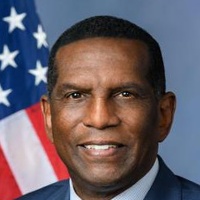
Clarence "Burgess" Owens
Representative
UT-4
The No Aid for Ghost Students Act of 2026 establishes mandatory identity fraud screening for all federal student aid applications starting in late 2026. If an application is flagged for potential fraud, colleges are prohibited from disbursing aid until they verify the student's identity using strict methods. This legislation also creates a higher scrutiny category for institutional program reviews if a school shows a pattern of paying aid on flagged applications without proper verification.
| Party | Total Votes | Yes | No | Did Not Vote |
|---|---|---|---|---|
Democrat | 212 | 36 | 172 | 4 |
Republican | 219 | 213 | 0 | 6 |
No Aid for Ghost Students Act Mandates Strict Identity Checks for FAFSA Starting in 2026
The No Aid for Ghost Students Act of 2026 aims to shut down fraud in the federal student aid system by requiring the Department of Education to screen every FAFSA application for 'ghost' identities. Starting October 1, 2026, a new identity fraud detection system will flag any application that raises a reasonable suspicion of foul play. If your application gets caught in this net, the Department will notify you and your prospective colleges, putting your financial aid on ice until you can prove you are who you say you are. This isn't just a simple checkbox; it requires high-level verification like in-person meetings, live video calls, or digital standards that meet strict federal security levels (NIST IAL2).
The Verification Gauntlet
For most students, the FAFSA is already a headache, but this bill adds a high-stakes hurdle for those flagged by the system. If you're a student working a full-time job or living in a rural area, the requirement for a live video call or an in-person visit to a financial aid office could mean taking time off work or traveling long distances just to unlock your tuition money. While the bill allows for third-party verification services, the burden of proof sits squarely on the student’s shoulders. If you can’t meet these standards—perhaps because you lack a high-speed internet connection for a synchronous video call or don’t have the specific ID types required by federal standards—your aid stays locked (Section 487(a)(15)(B)).
Schools on the Hook
Colleges and universities are being drafted as the front-line enforcement for these rules. Under the bill, schools are strictly prohibited from handing out a single cent of federal aid to a flagged student until the verification is complete and recorded. This adds a significant administrative load to financial aid offices, which are already juggling complex regulations. For the schools, the stakes are high: if the Department of Education notices a pattern of a college paying out aid to flagged students without following the new verification rules, that school will be slapped with a 'high-priority' label for government audits and program reviews (Section 3). This creates a 'verify or else' environment that might lead schools to be extra cautious, potentially slowing down the process for legitimate students.
The 'Reasonable Suspicion' Gray Area
A major piece of this puzzle is how the Department decides who is a 'ghost.' The bill relies on a 'reasonable suspicion' standard, which is policy-speak for a system that has a fair amount of wiggle room. Because the bill allows the Department to use its existing tech and doesn't explicitly define what triggers a flag, there is a risk of false positives. If the algorithm gets it wrong, a student who simply has a complicated living situation or a common name could find themselves stuck in a bureaucratic loop. While the bill requires the Secretary of Education to report to Congress on how well the system is working starting in 2027, the initial rollout in 2026 could be a bumpy ride for those trying to navigate the already stressful college enrollment season.