The Cloud LAB Act of 2026 establishes a National Science Foundation pilot program to create a national network of automated, remotely operated cloud laboratories designed to advance biotechnology research and AI-driven data analysis.
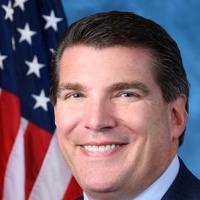
Jay Obernolte
Representative
CA-23
The Cloud LAB Act of 2026 establishes a national pilot program to create a network of automated, remotely operated biotechnology laboratories. By funding these "cloud laboratories," the initiative aims to accelerate research, generate high-quality biological data for artificial intelligence training, and provide scientists with secure, centralized access to advanced experimental tools.
Cloud LAB Act of 2026 Proposes National Network of Remote-Controlled Biotech Labs to Supercharge AI Research
Imagine a world where a scientist in a rural town can run high-end experiments in a state-of-the-art lab hundreds of miles away, all from their laptop. The Cloud LAB Act of 2026 aims to make this a reality by establishing a national network of 'cloud laboratories'—facilities packed with advanced robotics and instruments that can be programmed and controlled remotely. The goal is to churn out massive amounts of high-quality biological data to train artificial intelligence models, potentially speeding up breakthroughs in medicine, agriculture, and green tech. Under the bill, the National Science Foundation (NSF) would launch a pilot program to build and connect these facilities, ensuring that researchers can find the specific tools they need without having to own a multi-million dollar lab themselves.
Lab Access Without the Lab Coat
The heart of this bill is about democratizing high-tech research. Within 360 days of the law taking effect, the NSF Director has to drop a detailed plan for how this network will work, including a grant program to fund at least five new cloud labs over the next few years (Section 3). For a small-scale researcher or a startup founder, this could be a game-changer. Instead of spending years raising capital just to buy one piece of equipment, they could apply for access as an 'authorized researcher' and run experiments 24/7 via the cloud. The bill specifically asks for a scheme that allows people doing non-proprietary work—the kind of research meant for the public good—to access these labs at little to no cost.
The Brains and the Bricks
To make sure this isn't just a bunch of expensive robots gathering dust, the bill creates a Cloud Laboratory Advisory Board within 180 days. This group will be a mix of government employees, academic experts in fields like synthetic biology, and industry pros from the health and ag sectors (Section 3). Their job is to figure out the 'biological data collection priorities'—basically deciding which scientific questions are the most urgent to solve. They’ll also be the ones setting the rules for who gets to be an 'authorized researcher.' This is a key detail because while we want broad access, we also don't want these powerful tools falling into the wrong hands or being used for risky experiments without oversight.
Security in the Digital Petri Dish
Because these labs are controlled over the internet and handle sensitive biological data, the bill puts a heavy emphasis on 'biosecurity' and 'cybersecurity' from day one. The NSF has to ensure that the data generated is stored and published in a secure format so it can be used as a public resource for training AI. While the bill is clear about its goals, the real-world impact will depend on how the NSF defines those 'authorized researcher' credentials. If the bar is set too high, it might just benefit the big players who already have resources; if it's set right, it could open the door for the next generation of innovators to solve major health and environmental challenges from anywhere with a Wi-Fi connection.