This bill grants employees of tribally controlled schools eligibility for federal retirement benefits, including the Federal Employees Retirement System (FERS) and the Thrift Savings Plan (TSP).
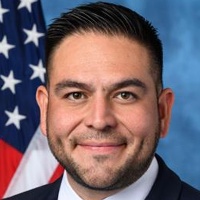
Gabriel (Gabe) Vasquez
Representative
NM-2
The Parity for Tribal Educators Act grants employees of tribally controlled schools eligibility for federal retirement benefits, including the Federal Employees Retirement System (FERS) and the Thrift Savings Plan (TSP). Under this bill, the Bureau of Indian Affairs would cover the required government contributions for participating staff. This legislation ensures that educators at these institutions receive retirement benefits comparable to those of federal employees.
Tribal Schools Get Federal Retirement Boost: Parity for Tribal Educators Act Grants FERS and TSP Access
The Parity for Tribal Educators Act aims to close a significant benefits gap by granting employees of tribally controlled schools access to the Federal Employees Retirement System (FERS) and the Thrift Savings Plan (TSP). Under Section 2, these educators and staff members—who work in schools operated through contracts or grants under the Indian Self-Determination and Education Assistance Act—will now be treated as federal employees for the specific purpose of retirement planning. This means a teacher at a tribal school in a remote community can now build the same kind of pension and 401(k)-style savings that a federal employee at the Department of Education or a VA hospital enjoys.
Levelling the Retirement Playing Field
For years, educators in tribal schools often faced a 'benefits cliff' compared to their peers in the direct federal service. This bill changes the math by requiring the Bureau of Indian Affairs (BIA) to pick up the tab for the government’s portion of retirement contributions under sections 8423 and 8432 of title 5. For a mid-career administrator or a young teacher, this translates to thousands of dollars in employer-paid benefits that weren't previously guaranteed. By making the BIA responsible for these costs, the bill ensures that tribal school budgets aren't drained to provide these competitive benefits, theoretically making it easier for these schools to recruit and keep high-quality staff.
Choice and Implementation
While the bill automatically qualifies these workers for federal benefits, it respects individual autonomy through an opt-out provision. A 'covered employee'—defined as anyone working in a school under the Tribally Controlled Schools Act of 1988—can choose not to participate in the federal system if they prefer a different retirement path. The Director of the Office of Personnel Management (OPM) is tasked with setting up the procedures for these elections. This flexibility is key for staff who might already have established private or tribal retirement accounts and want to avoid the administrative headache of switching systems.
The Ripple Effect for Communities
Beyond the spreadsheets, this policy is about workforce stability. When a tribal school can offer a federal pension, it’s no longer just a 'stepping stone' job; it becomes a viable long-term career. For parents and students, this could mean less teacher turnover and more consistent classroom leadership. The main challenge lies with the BIA, which will need to manage the increased budgetary requirements to cover these new contributions. However, the bill is remarkably specific about who qualifies and how the money flows, leaving little room for the kind of bureaucratic vagueness that usually stalls implementation.