The POINT Act prohibits executive branch officials from interfering in federal, state, or local elections and establishes legal protections for states against federal overreach regarding constitutional rights and the use of armed forces.
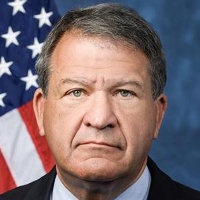
George Latimer
Representative
NY-16
The Protecting Our Integrity and Nation from Tyranny (POINT) Act establishes federal criminal penalties for executive branch officials who interfere in state or federal elections. The bill also restricts the President’s authority to deploy armed forces in ways that disrupt elections and creates an expedited legal process for states to sue the federal government for constitutional violations.
POINT Act Proposes 5-Year Prison Terms for Executive Branch Election Interference and Limits President's Use of Military at Polls
The POINT Act aims to draw a hard line between the White House and the ballot box by making it a federal crime for the President, Cabinet members, and high-ranking executive officials to interfere with state or federal elections. Under this bill, 'interference' isn't just about tampering with machines; it includes using government property, personnel, or even official communications to influence voters, undermine public confidence in the results, or spread unsubstantiated claims of fraud. If a covered official—ranging from the Attorney General to a manager at the FBI—is found guilty, they could face up to five years in prison and heavy fines. This essentially creates a legal 'keep out' sign for the executive branch regarding the mechanics of how we vote and how those votes are counted.
Drawing a Line in the Sand
One of the most significant shifts in this bill involves the President’s power to deploy the military or federal law enforcement. Section 3 specifically prohibits the use of the Armed Forces in a way that would likely disrupt or delay an election. For example, if you’re heading to your local community center to vote, you shouldn't see federal troops stationed there in a way that feels like intimidation or a delay tactic. The bill does carve out two big exceptions: enforcing the Voting Rights Act and dealing with actual armed rebellion or secession. However, if a state feels the President has overstepped, they can sue immediately. In a rare legal twist, the burden of proof shifts to the President, who would have to prove in court that the deployment wasn't intended to mess with the election results.
The 'Vague' Factor and Your Daily Feed
While the goal is to protect the integrity of the vote, the bill’s definitions are broad enough to raise some eyebrows. It criminalizes 'communicating' with local officials to publish 'unsubstantiated claims' of election mismanagement. In the real world, this could get complicated. Imagine a scenario where a federal agency head flags a legitimate technical glitch on social media; if that claim is later deemed 'unsubstantiated,' they could be looking at a felony. Because the law targets anyone in a 'managerial position' within the executive branch, it could change how thousands of career civil servants communicate during election season, potentially making them hesitant to report issues for fear of being accused of 'undermining confidence.'
Fast-Tracked Legal Battles
Recognizing that election disputes move at the speed of light, the POINT Act sets up a 'turbo' mode for the court system. If a state sues the federal government over these provisions, or over broader constitutional rights like the 10th Amendment (which reserves powers to the states), the courts are required to move those cases to the front of the line. Appeals must be filed within a tight 15-day window—a fraction of the usual time allowed. For the average citizen, this means that high-stakes legal battles over who controls an election would be settled in weeks rather than years, preventing the kind of long-term uncertainty that can leave voters wondering if their local results will actually stand.