The No Waivers for Fraud Act of 2026 eliminates the Secretary of Health and Human Services' authority to waive financial penalties for states that fail to comply with Child Care and Development Block Grant requirements.
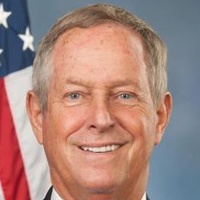
Joe Wilson
Representative
SC-2
The No Waivers for Fraud Act of 2026 removes the authority of the Secretary of Health and Human Services to waive financial penalties imposed on states for non-compliance with the Child Care and Development Block Grant. This legislation ensures that states remain fully accountable for program violations by eliminating the Secretary's discretion to grant sanctions waivers.
No Waivers for Fraud Act of 2026 Mandates Immediate Financial Penalties for State Child Care Programs
The No Waivers for Fraud Act of 2026 removes the Secretary of Health and Human Services' power to forgive financial penalties when states fail to meet federal standards for the Child Care and Development Block Grant (CCDBG). Under current rules, if a state messes up its administrative homework or fails to meet specific program requirements, the Secretary can look at the situation and decide to waive the resulting fine. This bill deletes that 'get out of jail free' card entirely by amending Section 658I(c) of the original 1990 Act. By stripping away the authority to waive sanctions in paragraphs (1) through (7), the federal government is moving toward a zero-tolerance policy for state-level non-compliance.
Accountability or Aches?
This change shifts the federal-state relationship from one of guided oversight to strict enforcement. For a parent relying on subsidized child care, this might sound like a win for accountability—ensuring that the billions in federal tax dollars sent to states are used exactly as intended. However, the lack of a safety valve means that even if a state has a legitimate, one-time administrative glitch or a localized disaster that prevents them from meeting a deadline, the federal government must still levy a financial penalty. There is no longer a mechanism to distinguish between a state intentionally cutting corners and a state facing a genuine, temporary hurdle.
The Cost of Rigid Rules
When the federal government hits a state with a sanction, that money usually has to come from somewhere. If a state loses a portion of its CCDBG funding because of a mandatory penalty, it could lead to a squeeze on the ground. For a child care provider in a high-cost urban area or a rural town, this might mean a delay in reimbursement checks or a reduction in the number of subsidized slots available for local families. Because the bill removes the Secretary’s ability to exercise 'nuanced judgment' under Section 2, the financial impact on state budgets becomes predictable and rigid, regardless of whether the violation was a major fraud or a minor technicality.
Balancing the Books
The long-term play here is to force states into perfect compliance by making the cost of failure too high to ignore. While this eliminates the risk of political favoritism—where a Secretary might waive fines for 'friendly' states while punishing others—it also removes the flexibility needed to manage complex social programs. For the workforce, this means the stability of child care systems now rests entirely on a state's ability to maintain flawless administrative records. If your state’s paperwork falls behind, the funding that keeps your toddler’s daycare affordable could be the first thing on the chopping block to pay for federal sanctions.