The CRACKDOWN Act of 2026 mandates corrective action plans and establishes conditional funding ineligibility for states that fail to reduce improper payment rates within the Child Care and Development Block Grant program.
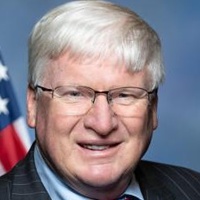
Glenn Grothman
Representative
WI-6
The CRACKDOWN Act of 2026 aims to reduce financial mismanagement in the Child Care and Development Block Grant program by requiring states with improper payment rates exceeding 5% to implement mandatory corrective action plans. States that fail to meet these standards for two consecutive years face temporary ineligibility for federal funding. This legislation ensures greater accountability and oversight to protect taxpayer resources.
CRACKDOWN Act of 2026 Sets 5% Error Threshold for Child Care Funding: States Face Total Funding Loss After Two Years of Non-Compliance.
The CRACKDOWN Act of 2026 targets the financial plumbing of the Child Care and Development Block Grant, the primary federal fund that helps low-income families afford daycare while parents work or go to school. Specifically, Section 2 of the bill mandates that if a state’s 'improper payment rate'—money sent to the wrong person, in the wrong amount, or without the right paperwork—exceeds 5% of its total program budget, the state must enter a corrective action plan. If that state fails to get its error rate below 5% for two consecutive fiscal years, it becomes entirely ineligible for federal child care funds until it can prove to the Secretary of Health and Human Services that it is making 'significant progress' toward fixing the issue.
The 5% Red Line
For a state agency, an 'improper payment' isn't always fraud; it’s often a paperwork glitch, like a parent forgetting to update their income by a few dollars or a provider missing a signature on a timesheet. Under this bill, these administrative hiccups carry heavy stakes. If a state crosses the 5% threshold, it must jump through federal hoops to stay in the program. For a working parent, this means the stability of their child’s daycare spot is now tied directly to how well their state government manages its spreadsheets. If the state can't tighten its record-keeping fast enough, the federal tap could be turned off entirely, leaving families to foot the full bill for child care or drop out of the workforce.
High Stakes for Local Providers
Child care providers, many of whom operate on razor-thin margins, could find themselves in a precarious spot. Because the bill allows the Secretary to restore funding only if a state demonstrates 'significant progress' (SEC. 2), there is a period of uncertainty where local daycares might not know if their state-subsidized payments are coming next month. A small business owner running a neighborhood daycare center can’t easily weather a 30-day or 60-day funding gap while state and federal officials argue over whether a corrective plan is working. This provision essentially uses the entire state’s child care budget as leverage to force better bookkeeping.
The 'Significant Progress' Wildcard
The bill introduces a level of administrative discretion that could lead to inconsistent results across the country. The term 'significant progress' isn't strictly defined in the text, meaning the Secretary holds the power to decide which states get their funding back and which don't. While the goal is to ensure taxpayer dollars are spent accurately, the immediate real-world risk is a 'cliff effect.' If a state loses eligibility, the burden doesn't fall on the bureaucrats who made the errors; it falls on the low-income families and child care workers who rely on that funding to keep their daily lives running.