The Securing Our Streets (SOS) Act of 2026 authorizes $10 billion in grants to help states expand correctional capacity and implement stricter sentencing and detention policies for repeat violent offenders.
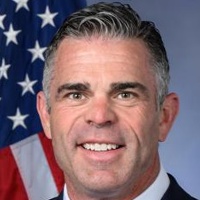
Tony Wied
Representative
WI-8
The Securing Our Streets (SOS) Act of 2026 establishes a $10 billion federal grant program to assist states in expanding correctional capacity and incarcerating repeat violent offenders. To qualify for funding, states must implement stricter sentencing requirements, including mandatory minimums for repeat offenders and "three-strikes" life imprisonment policies. The program aims to enhance public safety by supporting the construction of secure facilities and the training of correctional personnel.
SOS Act Proposes $10 Billion Federal Push for 'Three-Strikes' Laws and Prison Expansion
The Securing Our Streets (SOS) Act of 2026 is a massive federal pivot toward more intensive incarceration, offering a $10 billion carrot to states willing to toughen their sentencing playbooks. Starting within 180 days of becoming law, the Attorney General would launch a grant program that essentially pays states to keep people behind bars longer. To get a slice of that $10 billion pie between 2027 and 2031, states have to prove they’ve adopted specific 'tough on crime' policies, including mandatory life sentences for third-time violent offenders and requiring inmates to serve at least 85% of their time.
The Cost of Admission
For a state to qualify for these funds, it has to overhaul its legal standards to meet federal requirements listed in Section 2. This includes implementing 'three-strikes' laws that mandate life imprisonment for three separate violent convictions. It also requires states to allow pretrial detention for anyone charged with a violent crime who is deemed a 'clear threat'—a term that isn't strictly defined in the text. While this aims to keep dangerous individuals off the streets, it also removes a lot of the 'wiggle room' or judicial discretion that judges currently use to evaluate cases on an individual basis. For a local taxpayer, this means your state might be changing its laws not just based on local needs, but to secure federal cash for prison construction.
Building Big and Staying Long
If your state wins a grant, the money is earmarked for three specific things: building new prisons, expanding the capacity of existing ones, and training staff. This isn't money for drug treatment or job training; it’s strictly for the infrastructure of incarceration. For someone working in construction or corrections, this could mean a surge in local jobs and facility upgrades. However, there’s a long-term catch. While the federal government provides the initial $10 billion to build the wings and cell blocks, the bill doesn't cover the decades of electricity, food, and healthcare costs for the people living inside them. Once the grant money runs out in 2031, state budgets—and by extension, state taxpayers—will be on the hook for the 'tail' of these expenses.
The Neighborhood Impact
The real-world ripple effects will likely hit hardest in communities already seeing high police activity. By requiring that repeat offenders serve 85% of their sentences, the bill effectively ends early release for good behavior for a large group of people. For a family with a relative in the system, this means 'coming home' dates move much further into the future, regardless of rehabilitation efforts. Additionally, the push for more pretrial detention could mean more people sitting in local jails while waiting for their day in court, potentially losing jobs or housing before they've even been convicted. The SOS Act is a clear bet on the idea that more beds and longer stays equal safer streets, but it’s a bet with a $10 billion entry fee and a very long-term tab for the states.