The Protect our Ballots Act of 2026 requires 501(c)(3) nonprofits that pay individuals for political campaign activities to participate in the federal E-Verify program.
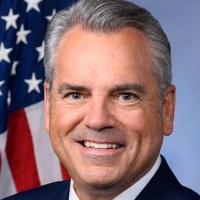
Mark Alford
Representative
MO-4
The Protect our Ballots Act of 2026 mandates that 501(c)(3) nonprofit organizations involved in political activities must enroll in and utilize the federal E-Verify program. This requirement ensures that individuals hired for political management or campaign services are verified for legal employment eligibility.
Protect our Ballots Act of 2026 Mandates E-Verify for Nonprofits Engaged in Political Activity
The Protect our Ballots Act of 2026 shifts the rules for how certain tax-exempt organizations handle their hiring. Specifically, it targets 501(c)(3) nonprofits—the kind of groups usually focused on charitable, religious, or educational missions—and requires them to use the federal E-Verify system if they pay anyone to perform 'political' work. This means if a nonprofit pays a staffer or contractor to take an active part in political management or a campaign, that organization must now legally verify the worker’s employment eligibility through the Department of Homeland Security’s electronic database. Under Section 2, this isn't just a suggestion; these groups must formally elect to participate in E-Verify and stick to all its federal terms and conditions.
The Digital Paper Trail
For a local advocacy group or a community-based nonprofit, this bill introduces a significant administrative shift. Currently, many private nonprofits manage hiring through standard I-9 forms, but E-Verify is an additional web-based step that compares employee information against Social Security Administration and DHS records. If you’re a project manager at a small nonprofit that organizes voter registration drives or policy advocacy, your employer would now have to navigate this federal portal for every new hire involved in that work. While the goal is to ensure only those legally authorized to work in the U.S. are participating in paid political activity, the immediate effect is a new layer of HR compliance for organizations that might not have a dedicated legal or HR department.
Defining 'Political' in the Real World
A key challenge here lies in the bill’s broad language regarding 'political purpose' and 'political management.' In the nonprofit world, the line between 'education' and 'political activity' can sometimes be thin. For example, if a church-affiliated nonprofit pays a part-time coordinator to organize a public forum on local ballot initiatives, does that count as 'political management' under Section 2? Because the bill doesn't provide a narrow definition for these terms, many mid-sized organizations might find themselves in a gray area, potentially enrolling in E-Verify just to avoid the risk of non-compliance. This could lead to increased costs for software integration and staff training for groups that are already operating on tight, donor-funded budgets.
Impact on the Nonprofit Workforce
For the people working these jobs—everyone from data analysts at policy think tanks to field organizers for community groups—this means more scrutiny during the onboarding process. The bill specifically links the act of being paid for political services to a mandatory federal background check on immigration status. While large corporations are used to this system, the expansion into the 501(c)(3) sector marks a new intersection of immigration enforcement and civic engagement. For the busy professional juggling a career in the nonprofit sector, this bill adds a new requirement to the 'fine print' of their employment contract, ensuring that the person behind the political messaging has been digitally cleared by the federal government.