This bill repeals the provision of law that grants automatic annual pay adjustments for Members of Congress.
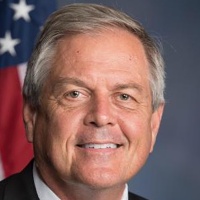
Ralph Norman
Representative
SC-5
This bill seeks to eliminate the provision of law that grants automatic annual pay adjustments for Members of Congress. If enacted, this legislation would end the automatic salary increase process, effective at the start of the 120th Congress.
Congress Ends Automatic Pay Raises: New Bill Requires Lawmakers to Vote on Their Own Salary Growth Starting with the 120th Congress.
This bill strikes down the long-standing rule that allows Members of Congress to receive automatic annual pay raises without ever having to cast a public vote. Specifically, it repeals paragraph (2) of section 601(a) of the Legislative Reorganization Act of 1946, which is the legal mechanism that triggers automatic cost-of-living adjustments (COLA) for federal lawmakers. By removing this authority, the bill ensures that if representatives want a raise in the future, they will have to propose it and vote on it on the record, rather than letting a computer algorithm handle the optics of their compensation.
Putting the 'Auto-Pilot' in Park
For decades, the system has been set to 'cruise control.' Currently, under the 1946 Act, Congressional salaries are adjusted automatically based on changes in the Employment Cost Index—a measure of private-sector wage growth. This bill effectively cuts the wires to that system. For a local business owner or a nurse, getting a raise usually involves a performance review or a contract negotiation; for Congress, this bill moves them closer to that reality. By requiring an explicit legislative act for any pay increase, it forces a level of transparency that hasn't been the default setting for over 75 years.
The Long Game for Implementation
While the bill is direct, it isn't immediate. The text specifies that these changes will not take effect until the date the 120th Congress convenes. Since we are currently in the 118th Congress, this means the automatic adjustments will remain on the books for several more years. This delay ensures that the rules aren't being changed mid-stream for current sitting members in a way that could be seen as an immediate political stunt, but it also means the fiscal impact of stopping these raises won't hit the federal ledger for a while. It’s a slow-burn policy change that fundamentally alters how the 'board of directors' for the country gets paid.
Accountability at the Checkout Counter
In the real world, this is about the optics of accountability. When inflation hits and the cost of eggs or gas goes up, most workers don't have a statutory guarantee that their paycheck will keep pace. By eliminating the automatic COLA, lawmakers will find themselves in the same boat as many of their constituents—having to justify why a raise is necessary during a public meeting. The 'technical amendments' mentioned in the bill are essentially legislative housekeeping, ensuring that other parts of the federal code don't accidentally trigger the old pay system once the 120th Congress officially punches the clock.