This act prohibits the use of federal funds or official resources for political campaigning and bans federal law enforcement, intelligence, or military personnel from domestic election locations through 2026 without Congressional authorization.
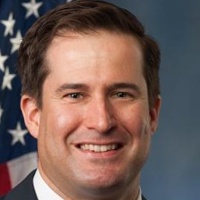
Seth Moulton
Representative
MA-6
The Defend Elections from Trump Act prohibits the use of federal funds or official resources for political campaign activities related to federal elections. It also strictly bans the deployment of federal law enforcement, intelligence, or military personnel at domestic election locations through the end of 2026, unless specifically authorized by Congress. Violations are subject to civil penalties enforced by the Attorney General.
Defend Elections from Trump Act Bans Federal Funds from Campaigns and Limits Uniformed Presence at Polls through 2026
This bill draws a hard line between the federal government's checkbook and political campaigns. It explicitly prohibits any federal department or agency from using taxpayer money to promote or defeat a candidate for federal office. Beyond just the money, it tells federal employees they cannot use their official titles, government property, or authority to tip the scales in an election. If someone breaks these rules, the Attorney General can hit them with a civil penalty of up to $10,000 per violation. It’s a straightforward move to ensure that the person processing your passport or managing a federal contract isn’t using their position to run a campaign on the side.
Clearing the Polling Place
One of the most visible changes involves who you’ll see when you go to cast your ballot. From now until December 31, 2026, the bill bans the use of federal funds to send law enforcement, intelligence officers, or military personnel to polling places, election offices, or sites where votes are being counted. Think of it as a 'no-uniform' zone for federal agents at the local gym or school where you vote. There are only two real exceptions: if Congress passes a specific law saying they need to be there, or if that federal officer is simply there as a private citizen to cast their own vote. For a poll worker or a local volunteer, this means the security and administration of the site stays local, without federal boots on the ground unless there's a very specific legal reason.
Professional Boundaries and the Fine Print
For the millions of people working in the federal workforce—from tech specialists to office managers—this bill clarifies the 'work-life balance' when it comes to politics. By referencing the Federal Election Campaign Act of 1971, it uses established definitions to make sure everyone knows what counts as an 'election.' While the rules are clear, there is a bit of a gray area in Section 1 regarding what exactly counts as 'interfering with' or 'affecting' an election outcome. In the real world, a federal manager might worry if a routine policy announcement could be viewed as a violation if it happens too close to a Tuesday in November. However, the $10,000 price tag for violations serves as a significant deterrent against using official resources—like government vehicles, email accounts, or office space—for partisan wins.
Accountability and Implementation
This isn't just a set of suggestions; it’s an enforcement tool handed to the Department of Justice. By authorizing civil actions in federal district court, the bill creates a pathway to hold officials accountable without necessarily jumping straight to criminal charges. For the average voter, the impact is largely about peace of mind and the preservation of a neutral voting environment. It ensures that the machinery of the federal government remains focused on its day job rather than becoming an extension of a campaign headquarters. While the sunset date of late 2026 means these specific restrictions on personnel are temporary, the ban on using federal funds for campaign activity is a permanent shift in how the government is expected to operate.