This bill prohibits certain high-level federal officials and their acting counterparts from simultaneously holding or performing the duties of any other federal position.
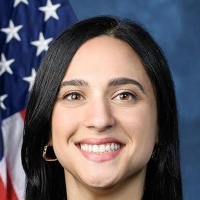
Yassamin Ansari
Representative
AZ-3
The Dual Hatting Limitation Act of 2026 prohibits certain key federal officials and their acting counterparts from simultaneously holding or performing the duties of any other federal position. This restriction specifically applies to the Directors of OPM and OGE, the Special Counsel, the Archivist, and all Level I Executive Schedule appointees. The bill also prevents the President from directing an individual to serve as an acting official in a vacant office if they are already serving in another acting capacity.
Dual Hatting Limitation Act of 2026 Bans Top Federal Officials from Holding Multiple Jobs Simultaneously
The Dual Hatting Limitation Act of 2026 is essentially a 'one person, one job' rule for the highest levels of the federal government. It amends several parts of the U.S. Code to ensure that key leaders—specifically the Director of the Office of Personnel Management, the Special Counsel, the Director of the Office of Government Ethics, and the Archivist of the United States—cannot hold or perform the duties of any other federal position while they are in office. This rule also applies to anyone serving in an 'acting' capacity for these roles and extends to Level I Executive Schedule positions, which includes Cabinet-level secretaries. By drawing a hard line in Section 2, the bill ensures that the people managing the government's workforce, ethics, and records are focused entirely on those specific responsibilities rather than splitting their time or loyalty between multiple agencies.
Ending the Acting Official Shuffle
One of the most practical changes in this bill targets how vacancies are filled. Under current law, the President often has flexibility to move people around to fill empty seats temporarily. However, this bill adds a new subsection (d) to 5 U.S.C. 3345, explicitly stating that the President cannot direct someone to serve as an acting official if they are already serving as an acting official in another office. Think of it like a retail manager trying to run two different stores at opposite ends of town; eventually, things slip through the cracks. For an office worker or a small business owner who relies on federal agencies for permits or payroll regulations, this means the person in charge is actually in the building and focused on that agency’s specific mission, rather than being a placeholder juggling two high-stakes portfolios.
Focus on Ethics and Accountability
By specifically naming the Office of Government Ethics and the Special Counsel, the bill targets the very offices meant to keep the rest of the government in check. If a Special Counsel—the person responsible for investigating whistleblower complaints or prohibited personnel practices—were also running another department, a massive conflict of interest could arise. Under this legislation, these officials are legally barred from 'dual hatting,' a move designed to protect the integrity of their oversight. For the average citizen, this reduces the risk of 'backroom deals' or administrative bias, ensuring that the people tasked with being the government's referees aren't also playing for one of the teams on the field.