This Act establishes a federal prohibition on weather modification, geoengineering, and stratospheric aerosol injection, along with penalties and reporting requirements for violations.
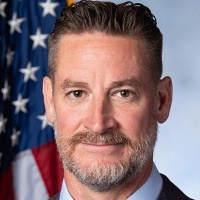
W. Steube
Representative
FL-17
The Air Quality Act establishes a sweeping federal prohibition on weather modification, geoengineering, and stratospheric aerosol injection, with limited exceptions for laboratory research and fire suppression. This legislation imposes significant civil and criminal penalties for unauthorized activities that affect interstate commerce or occur within U.S. jurisdictions. Furthermore, the Act mandates public reporting systems managed by the FAA and EPA to track aircraft and investigate suspected violations. Finally, it repeals all existing federal authorities that currently authorize weather modification activities.
Air Quality Act Proposes Total Ban on Weather Modification with $1.5 Million Daily Fines
The Air Quality Act aims to shut down all forms of intentional atmospheric alteration within U.S. borders. By targeting 'weather modification,' the bill seeks to pull the plug on everything from cloud seeding—often used by Western states to boost snowpack—to high-tech geoengineering meant to cool the planet. Under Section 1, the bill makes it illegal for any person or federal agency to fund or engage in stratospheric aerosol injection or geoengineering, backed by massive civil penalties starting at $500,000 per day. While it carves out narrow exceptions for indoor lab research and emergency fire suppression, the bill effectively ends decades of federal programs and private experiments aimed at tweaking the climate.
The Net is Cast Wide
The real-world impact of this bill hinges on its massive definition of 'weather modification' in Section 6. It doesn’t just cover 'mad scientist' scenarios; it includes any release of a chemical substance or 'conveyance of an apparatus' that affects the temperature or intensity of sunlight. For a researcher at a public university or a small tech startup testing new sensors in the upper atmosphere, this broad language creates a legal minefield. If a sensor release is interpreted as 'affecting the composition of the atmosphere,' that researcher could face five years in prison and a $100,000 criminal fine under Section 2. Because the law triggers if you simply use a phone or the internet to coordinate the work, almost any modern scientific project in this field would fall under federal crosshairs.
Eyes in the Sky and Neighborhood Watch
To catch violators, the bill turns the FAA and EPA into atmospheric investigators. Section 3 requires the FAA to build a tracking system where air carriers must report any aircraft equipped with parts that could support weather modification—even if they aren't currently using them. This data will be posted publicly online. Simultaneously, the EPA will launch a public portal for 'suspected violations.' Imagine a small-scale commercial pilot or a drone operator; under this system, a neighbor who sees a persistent contrail could file a report that triggers a formal federal investigation. This 'neighborhood watch' approach for the stratosphere puts a heavy burden on anyone operating unconventional aircraft or atmospheric equipment.
Research on Ice
Perhaps the most significant long-term shift is the total cutoff of federal support. Section 5 bans any recipient of federal funds from even testing or experimenting with these technologies. For the scientific community, this is a hard stop. While the bill aims to protect the environment from the 'unintended consequences' of playing with the weather, it also removes the legal framework for oversight. By repealing all existing permits and licenses in Section 4, the bill moves the U.S. from a system of 'regulated experimentation' to a total 'no-fly zone' for climate intervention, leaving no middle ground for those trying to study how to mitigate rising temperatures.