This Act establishes the AI Grand Challenges Program through the NSF to award prizes for AI research and development solving specific national challenges, including a dedicated competition for lethal cancers.
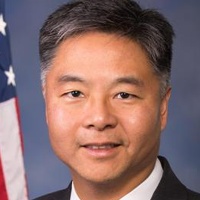
Ted Lieu
Representative
CA-36
The AI Grand Challenges Act of 2026 establishes a new prize competition program, managed by the National Science Foundation (NSF), to spur AI research solving critical national challenges. This program will award substantial cash prizes for breakthroughs, including a dedicated, high-value competition focused on advancing AI for the most lethal forms of cancer. Additionally, the bill mandates coordination across federal agencies to publish relevant scientific datasets to support these AI initiatives.
AI Grand Challenges Act Puts $10 Million Bounty on Cancer Breakthroughs and National Tech Solutions
The government is looking to crowdsource the next big tech breakthrough. The AI Grand Challenges Act of 2026 tasks the National Science Foundation (NSF) with setting up a high-stakes prize program to solve 'national challenges' using artificial intelligence. Instead of just handing out traditional grants to the usual suspects, this bill uses the Stevenson-Wydler Act to offer cold, hard cash to anyone—from a garage coder to a massive tech firm—who can hit specific, measurable targets. Think of it as a government-backed 'X-Prize' for the algorithms that will shape our future.
The $10 Million Moonshot
The most concrete part of this bill is a mandatory challenge focused on the most lethal forms of cancer. Within a year, the NSF has to launch a competition specifically for AI that can better detect, diagnose, or treat these diseases. The stakes are high: the bill (Section 2) mandates a minimum $10,000,000 payout for the winners. For a researcher at a university or a small biotech startup, that kind of money is a game-changer that could move a life-saving tool from the lab to your local hospital years faster than traditional funding cycles might allow.
Keeping the Cash at Home
While the prizes are big—starting at $1 million for general challenges and potentially climbing above $50 million—the guest list is exclusive. To win, you must be a U.S. citizen, a permanent resident, or a private company incorporated and primarily based in the States. This is a clear 'America First' approach to tech. If you’re a software engineer in Silicon Valley or a data scientist in Austin, the door is wide open. However, if you’re a foreign researcher or a company with overseas headquarters, you’re effectively locked out of the prize money, even if your AI has the best solution. The bill also allows the NSF to take 'donations' from for-profit companies to fund these prizes, which raises a bit of an eyebrow regarding who gets to help pick the winners, though the text explicitly says these donors can't influence the final judging.
Data for the People
One of the biggest hurdles in AI development is getting your hands on good data. Section 3 of the bill tries to fix this by requiring federal agencies to identify and publish massive 'grand challenge' data sets. For a small business owner trying to build a niche AI tool, this could be a goldmine. Imagine having access to standardized, high-quality federal data that was previously buried in bureaucratic silos. The goal is to level the playing field so that innovation isn't just reserved for the tech giants with the deepest pockets. The challenge, of course, will be in the rollout—how quickly these agencies can actually clean up and post this data in a way that’s actually useful for a developer sitting at a coffee shop with a laptop.