This Act establishes grant programs and provider reimbursement to expand access to HIV prevention medication (PrEP) and related services for underserved and uninsured individuals.
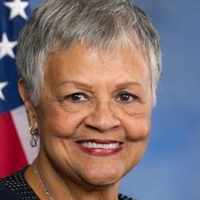
Bonnie Watson Coleman
Representative
NJ-12
The PrEP Assistance Program Act establishes federal grant funding to support organizations providing HIV prevention medication (PrEP) and related services. It also creates a reimbursement program to ensure uninsured individuals can receive these essential HIV prevention items and services at no cost through a "PrEP Pass" card. The legislation aims to expand access to PrEP by supporting community programs and eliminating financial barriers for the uninsured.
PrEP Assistance Program Act Proposes $400 Million Annual Investment and 'PrEP Pass' for Uninsured HIV Prevention.
This bill aims to overhaul how we handle HIV prevention by making Pre-Exposure Prophylaxis (PrEP) accessible to everyone, regardless of their bank account or insurance status. Starting in 2027, the legislation authorizes $400 million every year through 2031 to fund two major initiatives: a massive grant program for clinics and a direct reimbursement system for healthcare providers. The core goal is simple: eliminate the out-of-pocket costs that often stand between high-risk individuals and the medication that can prevent HIV infection.
The Grant Game-Changer
Under Section 2, the government will hand out grants of up to $10 million each to local health centers, tribal governments, and community nonprofits. This isn't just for the pills themselves; the money covers the whole 'hidden' cost of care. We’re talking about laboratory fees, telehealth visits, and even transportation to get to the clinic. If you’re a worker in a rural area without a car, or someone juggling two jobs with no time for a waiting room, this bill prioritizes 'innovative' models like mobile pop-up clinics and vending machines to meet you where you are. Importantly, if a clinic takes this grant money, they are legally barred from charging patients for any of these services.
The 'PrEP Pass' and Uninsured Access
For the millions of people without health insurance, Section 3 introduces a 'PrEP Pass' card. Think of it like a specialized health credit card that you take to a participating doctor. The provider swipes the pass, gives you the FDA-approved PrEP medication and the necessary blood tests, and then bills the government directly instead of you. The Secretary of HHS will set the reimbursement rates, ensuring that doctors are paid fairly—using Medicare rates as a benchmark for lab tests—so they actually have an incentive to sign up for the program.
Accountability and the Fine Print
While the bill is high on ambition, it does come with some homework for the organizations involved. Most grantees have to chip in a 10% 'matching fund' to show they have skin in the game, though this can be waived for smaller community clinics that are already stretched thin. To make sure the $400 million is actually moving the needle, the government will track data on race, age, and geography for five years. The challenge will be in the rollout: the bill gives the government one year to get these complex reimbursement and card systems online, and its success depends entirely on whether enough local doctors decide to register as 'program-registered providers.'