This act exempts veterans from the work requirements for the Supplemental Nutrition Assistance Program (SNAP).
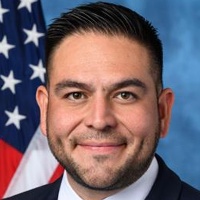
Gabriel (Gabe) Vasquez
Representative
NM-2
The Feed Our Veterans Act permanently exempts all veterans from the work requirements associated with receiving Supplemental Nutrition Assistance Program (SNAP) benefits. This legislation ensures that veterans have consistent access to food assistance without meeting specific employment criteria.
Feed Our Veterans Act Proposes Permanent SNAP Work Requirement Exemption for All Veterans
The Feed Our Veterans Act introduces a straightforward but significant change to the federal food assistance landscape by officially adding veterans to the list of groups exempt from Supplemental Nutrition Assistance Program (SNAP) work requirements. Under current law, most able-bodied adults without dependents must prove they are working or in a training program for at least 80 hours a month to keep their benefits for more than three months in a three-year period. This bill amends Section 6(o)(3) of the Food and Nutrition Act of 2008 to ensure that anyone who has served in the military is automatically excused from these mandates, regardless of their current employment status or physical ability.
Cutting the Red Tape for Service Members
For a veteran transitioning back to civilian life or a former service member working an unstable gig-economy job, this change removes a massive administrative hurdle. Imagine a veteran in their 30s who is juggling part-time construction work that fluctuates with the weather; under this bill, a slow month wouldn't trigger a loss of food assistance just because they fell short of the 80-hour threshold. By explicitly listing 'a veteran' as an exempt category, the legislation treats military service as a qualifying factor that supersedes the standard 'work-for-food' rules that apply to the general population.
Stability in the Grocery Aisle
The real-world impact here is about consistency and food security. Because the bill has a low level of vagueness, the rollout is expected to be direct: state agencies that manage SNAP would simply update their eligibility checklists to include veteran status as a permanent exemption. This prevents the 'churn' where people cycle on and off benefits due to paperwork errors or temporary job losses. For the busy veteran trying to manage a household or a small business, it means one less bureaucratic hoop to jump through and a more reliable safety net when the economy gets bumpy.