This bill mandates that the Thrift Savings Fund's fiduciaries protect U.S. national security by restricting investments in entities tied to adversarial nations and establishing a review process for fund investments and shareholder votes.
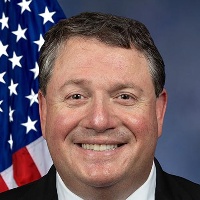
Randall "Randy" Fine
Representative
FL-6
The TSP Fiduciary Security Act of 2026 mandates that the Federal Retirement Thrift Investment Board protect national security as part of its fiduciary duty when managing the Thrift Savings Fund. The bill requires the Secretary of Labor to establish new regulations presuming non-compliance for investments in entities linked to prohibited foreign adversaries or certain shareholder votes. Furthermore, it explicitly prohibits TSP mutual fund window investments in entities based in the People's Republic of China.
TSP Fiduciary Security Act Proposes Ban on Chinese Investments and New National Security Rules for Federal Retirement Funds
If you work for the federal government or serve in the military, your retirement savings are held in the Thrift Savings Plan (TSP). A new bill, the TSP Fiduciary Security Act of 2026, wants to change the rules for how that money is managed by adding a major new priority: national security. Right now, the folks running the fund are legally required to focus on your financial best interest. This bill adds a new layer, stating that their duty to you also includes a duty to ensure your money isn't being used to harm the United States. It specifically targets investments in countries like China and Russia, aiming to keep federal employee dollars out of the hands of foreign adversaries.
No More Mutual Funds with Chinese Ties
The most direct change for anyone using the TSP's 'mutual fund window' is a hard line on China. Section 5 of the bill flat-out prohibits any mutual fund in that window from investing in companies based in the People's Republic of China or their subsidiaries. If you’re a mid-career office worker who picked a specific international fund for diversification, you might see that fund disappear from the menu or have its holdings forced to change. It’s a move designed to decouple U.S. government retirement funds from the Chinese economy, but it also means fewer choices for those who want broad global market exposure.
The 'National Security' Filter for Shareholder Votes
This bill doesn't just look at where the money goes; it looks at how the fund uses its power as a shareholder. Under Section 4, the Secretary of Labor would create a 'blacklist' of actions that are presumed to violate national security duties. For example, if a company you’re invested in wants to outsource defense-related tech to a 'covered country' (like Russia, Iran, or North Korea) or elect a board member with ties to Chinese military companies, the fund managers are essentially told they shouldn't vote 'yes.' This turns your retirement fund into a tool for foreign policy, ensuring that the collective weight of millions of civil servants isn't supporting business moves that could undermine the Pentagon.
Accountability and the Fine Print
To make sure this actually happens, the bill requires the Department of Labor to audit these investments and report back to Congress every year. There is a bit of a 'grace period' for the people running the fund—they won't be personally liable for mistakes regarding these new national security rules until January 1, 2027. However, after that date, the training wheels come off. The challenge here is the 'vague' factor: terms like 'harming national security' can be interpreted in many ways. While the goal is to protect the country, the reality for a busy federal employee is that their retirement board will now have to balance getting the best stock returns with navigating a complex web of geopolitical restrictions.