Here are one-sentence descriptions for each bill: **Advancing Commonsense Policies Act:** This bill extends the Livestock Mandatory Reporting program for one year, ensuring continued transparency in meat and livestock markets. **[Unnamed Bill on Veteran Apprenticeships]:** This legislation improves veteran transition by requiring employment counseling to include apprenticeship information and creating a dedicated online resource for veterans to find these programs. **[Unnamed Bill on Disabled Federal Employees]:** This law protects the specialized retirement benefits of permanently disabled federal employees in high-risk jobs when they are reassigned to less hazardous federal positions. **[Unnamed Bill on Retirement Savings Rules]:** This comprehensive legislation expands retirement savings access by mandating automatic enrollment in new workplace plans, increasing tax credits, and allowing student loan payments to qualify for employer matches. **[Unnamed Bill on Boots to Business Program]:** This legislation funds and establishes the Boots to Business Program through 2028 to provide entrepreneurship training to military-connected individuals seeking to start small businesses. **[Unnamed Bill on Sex Trafficking Penalties]:** This bill increases mandatory prison sentences for sex trafficking and enticement crimes that occur in or near schools or college campuses. **[Unnamed Bill on Asian Pacific American Museum]:** This legislation establishes a commission to study the feasibility, funding, and plan for creating a National Museum of Asian Pacific American History and Culture in Washington, D.C. **[Unnamed Bill on SelectUSA and Semiconductors]:** This legislation directs the SelectUSA program to focus on attracting foreign investment for U.S. semiconductor manufacturing by reviewing state-level input and reporting recommendations to Congress. **[Unnamed Bill on Homeland Security Grants]:** This bill establishes a formal review process for state and local governments seeking to use homeland security grants to purchase equipment that falls outside of national standards or FEMA's approved list. **[Unnamed Bill on NASA Property Leasing]:** This legislation extends NASA's authority to lease underused property to outside groups for one additional year, through 2033, to generate revenue for facility maintenance. **[Unnamed Bill on House Rule Review]:** This legislation establishes a new internal House rule requiring committees to hold hearings within one year to review the implementation of this Act. **[Unnamed Bill on House Whistleblower Protection]:** This legislation amends House rules to strictly prohibit the public disclosure of a whistleblower's identity by Members of Congress and staff. **[Unnamed Bill on Foreign Ownership of Marine Terminals]:** This bill requires a study on foreign ownership, particularly by Chinese or Russian entities, of marine terminals at major U.S. ports to assess economic security risks. **[Unnamed Bill on Budget Score Calculation]:** This legislation establishes the official method for calculating its federal budget impact by requiring the use of a pre-written statement from the House Budget Committee Chairman before a final vote. **[Unnamed Bill on Federal Credit Union Meetings]:** This law changes federal credit union board meeting frequency based on the institution's age and financial health ratings, requiring more frequent meetings for new or lower-rated credit unions. **[Unnamed Bill on Fiscal Year Funding]:** This legislation appropriates $1.75 billion across the Treasury, HHS, and Education departments for FY 2026, while also allocating funds for telehealth expansion in nursing facilities.
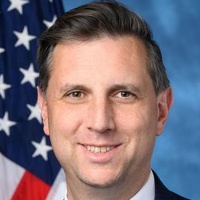
Seth Magaziner
Representative
RI-2
This bill package addresses a diverse range of issues, including extending the Livestock Mandatory Reporting program, improving veteran access to apprenticeship information, and protecting federal employees injured in high-risk jobs. It also enacts significant changes to retirement savings rules, funds specific government operations, and establishes commissions to study national museums and port security. Overall, the legislation focuses on market transparency, workforce transition, employee benefits, and targeted federal funding and oversight.
Sweeping 'Commonsense' Bill Touches Everything from Your 401(k) to Foreign Port Ownership
Alright, let's talk about the 'Advancing Commonsense Policies Act.' Don't let the name fool you into thinking it's just some minor tweak; this bill is like that multi-tool you keep in your junk drawer—it does a little bit of everything, touching on everything from how you save for retirement to who owns the docks at our biggest ports. It's a real grab bag of government reforms and adjustments, aiming to streamline some things, boost others, and keep a closer eye on a few more.
Your Retirement Just Got an Upgrade (Maybe)
Let's start with your wallet, specifically your retirement savings. This bill is a game-changer for many of us. If you're starting a new job with a 401(k) or 403(b) plan after 2026, get ready for automatic enrollment. That's right, you'll be opted in to saving, starting with 3-10% of your pay, and it'll even increase automatically each year. No more putting off that first step into retirement planning. For the small business owners out there, there are bigger tax credits for setting up these plans, making it easier to offer benefits. And for those juggling student loan payments, here's a cool one: employers can now match your student loan payments with contributions to your 401(k). That's a huge win for anyone trying to pay down debt while still saving for the future. Plus, you can keep your money growing tax-deferred longer, as the age for Required Minimum Distributions (RMDs) is gradually moving up to 75. More flexibility, more savings—that's the goal here.
Veterans and First Responders Get a Boost
For our veterans, this bill aims to make the transition to civilian life smoother. It requires employment counseling to include info on apprenticeship programs, making sure a proven path to skilled trades is front and center. There's even a new, dedicated website to help veterans find these programs by occupation and location. Think of it as a specialized LinkedIn for vets looking to apprentice. If you're a military-connected individual looking to start your own business, the Boots to Business Program is getting official funding through 2028, offering training from idea to business plan. This could be a real leg up for those looking to be their own boss.
And for our federal law enforcement officers, firefighters, and other high-risk federal employees, there's a crucial protection. If you get permanently disabled on the job, this bill helps safeguard your special retirement benefits if you're reassigned to a less hazardous role. It means you can keep contributing to your specialized retirement even in a new position, ensuring that your years of service in a dangerous job aren't penalized by an injury. This is about retaining experienced people and providing a safety net for those who put themselves on the line.
Keeping an Eye on Our Ports and Tech
On the national security front, the bill is taking a closer look at who owns what. It mandates a study on foreign ownership of marine terminals at our 15 largest U.S. container ports, specifically eyeing Chinese or Russian entities. The goal is to understand how this might affect our economic security and whether federal grant money is flowing to these foreign-owned facilities. If you're wondering about the supply chain, this is a big deal, as ports are critical choke points for trade. The findings could lead to new policies on foreign investment in our port infrastructure.
Speaking of supply chains, the SelectUSA program is now directed to focus on attracting foreign investment into U.S. semiconductor manufacturing. This is all about shoring up our domestic tech production, which could mean more jobs and less reliance on overseas factories for critical components. It's a smart move to keep our tech sector strong and secure.
Government Operations: Tweaks and Transparency
This bill also has a few behind-the-scenes changes for how government operates. It's modifying some FCC reporting requirements, which could mean less frequent public data on certain topics. While the aim might be to reduce administrative burden, it's worth keeping an eye on whether this means less transparency. There's also a GAO study mandated for a Department of Energy loan program to assess its financial risk to taxpayers. For federal credit unions, the board meeting frequency is now tied to their financial health; well-run ones can meet less often, while newer or struggling ones need more frequent oversight.
And in a move to protect those who speak up, the bill prohibits public disclosure of whistleblower identities by Members of Congress and House staff. This is huge for encouraging people to report wrongdoing without fear of being outed. However, there's a catch: a two-thirds committee vote could still allow disclosure if deemed 'in the public interest,' which leaves a bit of wiggle room for interpretation. Finally, for those who care about how laws are actually implemented, the bill requires House committees to hold hearings on its own implementation within a year. It's a way to keep the executive branch accountable for how they put this sprawling piece of legislation into practice.
This bill is a lot to unpack, touching on so many aspects of our daily lives and national interests. It's a mix of clear benefits, like boosting your retirement savings, and areas where the devil will be in the details of implementation, like how 'in the public interest' is defined for whistleblowers or how foreign ownership at our ports will be regulated. Keep an eye on how these changes roll out, because they could impact your job, your savings, and even the security of our supply chains.