This act authorizes the Department of Homeland Security to use grant funds for vehicle security upgrades, including bulletproof windows, for law enforcement.
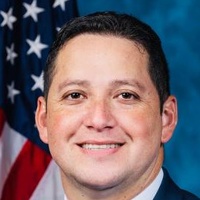
Ernest "Tony" Gonzales
Representative
TX-23
This act authorizes the Department of Homeland Security (DHS) to use grant funds specifically for vehicle security enhancement upgrades for law enforcement. It amends the Homeland Security Act of 2002 to explicitly permit the use of financial assistance for improvements like installing bulletproof windows.
Bulletproof Law Enforcement Vehicles Act: DHS Grant Funds Cleared for Patrol Car Armor Upgrades
The Bulletproof Law Enforcement Vehicles Act cuts through federal red tape to allow the Department of Homeland Security (DHS) to spend existing grant money on specialized vehicle security. Specifically, it amends Section 432 of the Homeland Security Act of 2002 to mandate that the Secretary authorize financial assistance for 'vehicle security enhancement upgrades.' While the bill is concise, it explicitly names bulletproof windows as a primary example of how these funds can now be used.
Reinforcing the Front Line
In the real world, this change addresses a practical gap in how local and federal agencies equip their fleets. Currently, a police department or DHS unit might have access to grant funds for technology or training, but they might be restricted from using that same pot of money to retrofit a standard SUV with ballistic glass. By adding subsection (e) to the law, the bill ensures that if the money is there, it can be used to turn a standard transport into a mobile shield. For an officer patrolling a high-risk area or a border agent working in isolated terrain, this means their mobile office gets a significant safety upgrade that was previously caught in a budgetary limbo.
From Policy to the Pavement
The rollout of this bill is straightforward because it leverages existing grant structures rather than creating a new, complex bureaucracy. It effectively gives local agencies more flexibility in how they spend the federal dollars they are already receiving under subsection (d)(2). For the average citizen, this doesn't necessarily mean a tax hike; rather, it’s a shift in how current public safety resources are prioritized. If you see a patrol car in your neighborhood, this bill makes it more likely that the person behind the wheel is protected by the same level of security found in high-level tactical vehicles, funded by grants that are already part of the annual federal budget cycle.