This act creates a federal income tax exclusion for the wages of eligible K-12 public school teachers, up to \$50,000 or \$65,000 depending on the school's circumstances.
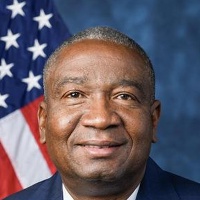
Cleo Fields
Representative
LA-6
The Supporting Teachers Through Tax Fairness Act creates a new federal income tax exclusion for eligible K-12 public school educators. This provision allows teachers, counselors, and aides working at least 900 hours annually to exclude up to \$50,000 of their wages from federal income tax. The exclusion limit increases to \$65,000 for educators in high-need, rural, or specialized STEM/Special Education roles.
Teacher Tax Break Bill Proposes $50,000 Income Exclusion Starting in 2026
The Supporting Teachers Through Tax Fairness Act is a direct attempt to put more cash back into the pockets of educators by fundamentally changing how their paychecks are taxed. Starting in the 2026 tax year, the bill allows K-12 public school teachers to exclude the first $50,000 of their wages from federal income tax. To qualify under Section 2, an educator—which includes teachers, aides, and counselors—must clock at least 900 hours during the school year. This isn't just a small deduction; it’s a full exclusion, meaning for many teachers, a massive chunk of their salary would be invisible to the IRS.
Boosting the Paycheck for High-Need Roles
While the $50,000 base is significant, the bill raises the stakes for specific high-priority areas. If you’re a special education teacher, a STEM instructor, or working in a rural school (defined as being outside a city of 50,000 people), that tax-free limit jumps to $65,000. The same higher limit applies to teachers in schools where at least 75% of students qualify for free or reduced-cost lunches. For a STEM teacher in a low-income district making $70,000, this could mean only $5,000 of their entire salary is subject to federal income tax, providing a massive boost in take-home pay that effectively acts as a significant, government-funded raise.
The Logistics of Eligibility
Making this work in the real world will require some paperwork. The bill tasks the Secretary of the Treasury with creating a verification system where schools must provide formal statements confirming a teacher hit that 900-hour mark and, if applicable, met the criteria for the higher $65,000 exclusion. While the definitions of "public school" are straightforward—publicly funded and tuition-free—the implementation will rely on how smoothly the Treasury can coordinate with school districts to verify these hours and school-wide demographics. For the average teacher, this means their HR department will likely become a key player in their annual tax filing process.
Long-Term Impact on the Classroom
By tying the largest tax breaks to specific subjects and locations, the bill is clearly designed to solve staffing shortages in tough-to-fill roles. A teacher deciding between a suburban district and a rural one might find the extra $15,000 in tax-free income a compelling reason to head to the countryside. However, because this is a federal tax change, the actual benefit for each teacher will vary depending on their total household income and tax bracket. While it doesn't change state taxes or social security contributions, it represents a major shift in how the federal government values public education as a profession.