This bill explicitly prohibits discrimination based on sex, sexual orientation, and gender identity in all places of public accommodation.
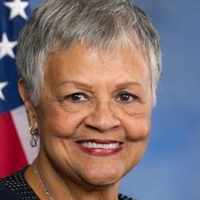
Bonnie Watson Coleman
Representative
NJ-12
The Customer Non-Discrimination Act amends the Civil Rights Act of 1964 to explicitly prohibit discrimination in public accommodations based on sex, sexual orientation, and gender identity. This expansion covers a wide range of establishments, including retailers, service providers, and transportation services. The bill also provides clear definitions for these protected characteristics and clarifies that existing federal sex discrimination laws already cover these areas.
Civil Rights Act Expansion: New Law Bans Discrimination in Stores and Online Based on Sexual Orientation and Gender Identity
The new Customer Non-Discrimination Act is straightforward: it amends the bedrock Civil Rights Act of 1964 to explicitly prohibit discrimination based on sex, sexual orientation, and gender identity in places of public accommodation. This isn't just about physical shops anymore; the bill updates the definition of a public accommodation to include pretty much any place that provides a good, service, or program, specifically calling out online retailers, service providers, banks, gas stations, healthcare facilities, and transportation services. If you’re paying for it or getting it for free—like at a food bank—this bill covers it.
The Fine Print: What is Protected Now?
This legislation tackles ambiguity by providing clear definitions. For starters, it defines “sex” broadly to include sexual orientation, gender identity, sex characteristics (like intersex traits), pregnancy, and sex stereotypes. This means if you are pregnant, you cannot receive less favorable treatment than someone with other physical conditions. It defines “gender identity” as an individual’s identity, appearance, or characteristics, regardless of their designated sex at birth, and “sexual orientation” as homosexuality, heterosexuality, or bisexuality.
For someone working a demanding job while also managing a pregnancy, this is a major win for clarity. If your employer provides a service or program (like a corporate gym or wellness program), they now have a clear federal mandate not to treat you differently because you're expecting. For the LGBTQ+ community, this is the federal government making it crystal clear that being denied service at a restaurant, a bank, or even an online store based on who you are is now federally illegal discrimination.
Shared Spaces and the RFRA Firewall
Two provisions stand out for their real-world impact. First, the bill addresses shared facilities, stating an individual cannot be denied access to a shared facility—think restrooms, locker rooms, or dressing rooms—that aligns with their gender identity. This provision is meant to resolve the ongoing confusion and conflict around facility access by setting a clear, federal standard for businesses and organizations that provide public accommodations.
Second, the bill contains a critical section that essentially builds a firewall against legal challenges based on religious exemptions. It specifies that the Religious Freedom Restoration Act of 1993 (RFRA)—a law often used to argue that compliance with certain laws would infringe upon religious liberty—cannot be used as a claim or defense against this new non-discrimination mandate. This means that if a business or service provider is found to be discriminating based on sexual orientation or gender identity, they cannot use RFRA as a legal shield. This move is intended to ensure that the non-discrimination protections are fully enforceable, though it is certain to draw legal scrutiny from groups that rely on RFRA for exemptions.
What This Means for Your Daily Life
If this bill becomes law, the biggest change is the comprehensive coverage. Whether you are a software developer buying goods from a massive online retailer or a construction worker using a local service center, the protection against discrimination based on your sexual orientation or gender identity is guaranteed across the board. The bill’s expansion of “public accommodation” to include online services is particularly important for the digital age, ensuring that the protections apply equally to physical and virtual commerce. Essentially, the bill ensures that the basic transaction of buying a coffee, getting a loan, or booking a flight is based solely on commerce, not on who you are or who you love.