This Act establishes a strategy for expanding Trade Transparency Units to enhance international data sharing and combat global money laundering.
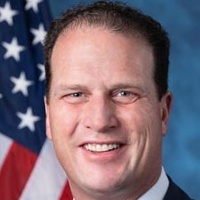
August Pfluger
Representative
TX-11
This act establishes a strategy to expand the use of Trade Transparency Units (TTUs) to combat international money laundering. It mandates the submission of a plan to Congress detailing how information sharing between U.S. agencies and foreign customs counterparts through TTUs will be improved. The legislation also requires an independent assessment of this strategy.
New Act Mandates Strategy to Expand Trade Transparency Units, Targeting Global Money Laundering Networks
The Trade Transparency Unit Strategy Act (TTUSA) is a piece of legislation focused less on new regulations and more on improving how the government coordinates its fight against global financial crime. Essentially, this bill tells the top brass at Homeland Security, State, Commerce, and Treasury to sit down and create a concrete plan, within 180 days, for expanding the use of Trade Transparency Units (TTUs).
What Are TTUs and Why Should You Care?
TTUs are specialized teams that share trade data—think shipping manifests, customs declarations, and payment records—between U.S. law enforcement (like Customs and Border Protection or Homeland Security Investigations) and their counterparts in other countries. Their main job is to spot Trade-Based Money Laundering (TBML). This is when criminals move dirty money around the world by manipulating the prices or quantities of goods being traded. For example, a drug cartel might ship $10,000 worth of electronics but declare them as $100,000 to move cash across borders legally, on paper.
For the average person, this matters because TBML is a massive tool used by organized crime, drug traffickers, and terrorist groups to finance their operations. When law enforcement gets better at stopping this flow of cash, it directly impacts the ability of these groups to operate. The TTUSA aims to scale up this information sharing, both between U.S. agencies (like FinCEN and Commerce) and with foreign customs partners, making it harder for criminals to hide in plain sight.
The Mandate: Strategy, Not Just Talk
The core of the bill requires the Secretary of Homeland Security, coordinating with the other key departments, to submit a strategy to Congress detailing exactly how they plan to expand these TTUs and improve data sharing (SEC. 2). This isn't just a suggestion; it’s a required, formalized plan. It acknowledges that effective enforcement against global crime requires seamless coordination across agency lines—something that often sounds simple in theory but is notoriously difficult in practice.
Crucially, the bill also requires an independent assessment of this strategy by the Comptroller General (CG) within 180 days after the strategy is submitted. This is the accountability clause. It means that the agencies can’t just submit a vague plan; they have to create something that a third party (the CG) can review and assess for effectiveness, implementation challenges, and overall soundness. This oversight ensures the expansion is strategic, not just bureaucratic.
The Real-World Impact
This legislation doesn't directly change any trade rules or taxes you pay, but it strengthens the global financial guardrails. Think of it as upgrading the security software on the international trade network. If TBML is reduced, it stabilizes legitimate commerce and reduces the ability of criminal enterprises to undercut honest businesses. For a small importer or exporter, this means operating in a cleaner, less risky global market. For the rest of us, it means better tools for fighting the criminal networks that drive up the cost of everything from housing to healthcare through illicit profits.