This bill establishes an expedited parole program for certain immediate family members of current and former U.S. Armed Forces members.
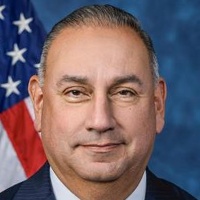
Gilbert Cisneros
Representative
CA-31
The PROTECT Military Families Act establishes a new parole program to allow certain immediate family members of U.S. service members and veterans to enter the United States. This program specifically targets spouses, widows/widowers, parents, and children of active duty or honorably discharged military personnel. Parole decisions require joint approval from the Secretaries of Homeland Security, Defense, and Veterans Affairs for any denial.
New 'PROTECT Military Families Act' Mandates Joint Cabinet Approval for Denying Immigration Relief to Service Members' Families
The new Parole Relief Offering Troops Expedited Compassionate Treatment of Military Families Act, or the PROTECT Military Families Act, establishes a direct pathway for certain immediate family members of U.S. service members and veterans to receive immigration parole. Think of parole as temporary permission to enter or stay in the U.S., but specifically granted for urgent humanitarian reasons or significant public benefit.
Who Gets the Green Light?
This bill targets the closest family ties to those who serve. Specifically, the Secretary of Homeland Security must grant parole to an alien who is the spouse, widow, widower, parent, or child of someone who is currently serving on active duty, in the Selected Reserve, or who previously served and was honorably discharged. This is huge for military families often separated by complex immigration rules. The parole is granted in one-year increments, which means it’s not permanent residency, but it offers critical stability and time for families to stay together while navigating longer-term solutions.
The 'Three-Secretary Rule' Against Arbitrary Denials
Here’s where the bill puts up a serious guardrail. Usually, immigration parole is highly discretionary—meaning the Secretary of Homeland Security (DHS) has a lot of wiggle room. This bill drastically changes that. An application cannot be denied unless the Secretary of Homeland Security, the Secretary of Defense (DOD), and the Secretary of Veterans Affairs (VA) jointly issue a written justification for the denial. And get this: they can’t delegate that responsibility. That’s three cabinet-level officials who have to sign off on saying no to a military family member.
Why does this matter? It makes arbitrary denials extremely difficult. If you’re the spouse of a soldier serving overseas, you don't have to worry that your application will get lost in bureaucratic shuffle or denied without serious high-level scrutiny. This joint sign-off requirement ensures that the interests of the military (DOD) and veterans (VA) are explicitly weighed against the immigration concerns (DHS), effectively prioritizing family unity for those who serve.
Transparency in Denial
If, after all that high-level review, an application is denied, the bill requires mandatory public reporting. The Secretary of Homeland Security must publish the detailed justification for the denial on a public DHS website. They have to redact any personal information, but the public will see why the denial happened. This is a massive win for transparency, allowing oversight and accountability in a process that is often opaque. It means the government has to put its reasons on the record, not just send a form letter.
The Real-World Impact
For the service member or veteran, this bill offers peace of mind. Imagine you’re deployed, and your spouse is struggling with immigration status. This bill provides a clear, protected path for them to remain in the U.S. with a significantly lowered risk of being separated from their family. For example, a veteran whose elderly parent is undocumented could now secure parole for that parent, ensuring they have care and stability. The fact that the process is so highly protected against denial is the main story here—it’s policy designed to support military readiness and morale by taking care of their families.