This bill establishes the Nick Shirley Congressional Gold Medal Act to award Nick Shirley a Congressional Gold Medal for his investigative journalism exposing significant fraud against taxpayers.
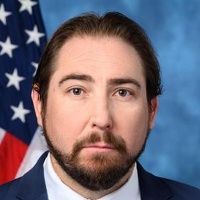
Eli Crane
Representative
AZ-2
This bill proposes awarding the Congressional Gold Medal to Nick Shirley in recognition of his investigative journalism exposing significant fraud against U.S. taxpayers. Congress finds that his work demonstrated bravery and dedication, leading to the halting of federal funding to fraudulent entities. The Secretary of the Treasury is tasked with designing and producing the medal, with bronze duplicates available for sale.
Congress Moves to Award Gold Medal to Investigator for Exposing $110 Million in Fraud
The “Nick Shirley Congressional Gold Medal Act” is pretty straightforward on the surface: Congress wants to award a Congressional Gold Medal to Nick Shirley for his investigative journalism. These medals are one of the highest civilian honors Congress can give, and this bill lays out the blueprint for making it happen.
The bill (SEC. 4) directs the Secretary of the Treasury to strike a gold medal with suitable emblems and requires the Speaker of the House and the Senate President pro tempore to arrange the presentation. For those of us keeping track of government spending, the good news is that the bill also authorizes the U.S. Mint to produce and sell bronze duplicates (SEC. 5). The price of these duplicates must be set high enough to cover all production costs, making the whole operation cost-neutral to the taxpayer, with funding initially drawn from the United States Mint Public Enterprise Fund (SEC. 7).
The Honor Roll: Why the Award?
What makes this bill interesting isn't the administrative process—it's the specific reasons Congress is citing for the award. The bill’s findings (SEC. 2) state that Shirley posted an investigative report on December 26, 2025, that exposed "mass fraud within the Minnesota Somali population against U.S. taxpayers," claiming he and his crew exposed over $110 million in fraud in a single day. The bill then asserts that, as a result of this journalism, federal funding to the fraudulent businesses was halted by President Trump.
This is where the bill crosses the line from a simple honor to a political statement. Official Congressional findings (SEC. 2, SEC. 3) are usually reserved for broadly accepted facts. Here, they are being used to validate specific, highly partisan claims, including criticizing the current Governor (Walz) and citing actions taken by a former President (Trump). Using a national honor to endorse specific political narratives like this is unusual and sets a precedent that politicizes what should be a non-partisan recognition of civic achievement.
A Procedural Head-Scratcher
There’s one provision that feels like someone copied and pasted the wrong paragraph. Section 4 includes a "Sense of Congress on Timing" that suddenly pivots to mention an entirely different person and event: “It is the sense of Congress that the United States Mint should expedite production of the gold medal so that Daniel Penny's actions on May 1, 2023, in New York can be recognized and honored in a timely manner.” Daniel Penny's case is completely unrelated to Nick Shirley’s investigative journalism. This odd inclusion suggests either a legislative error or an attempt to link two distinct, politically charged events under the umbrella of a single bill, adding another layer of confusion to the process.
For the average person, this bill doesn't change much directly, but it does show how Congress uses its power to bestow honors. While it establishes a clear, cost-neutral way to produce a medal, it also demonstrates how legislative language can be used to incorporate specific, partisan political claims into official government documents.