This bill prohibits U.S. recognition of the Taliban regime in Afghanistan, designates it as a state sponsor of terrorism, and formally designates the Taliban as a foreign terrorist organization.
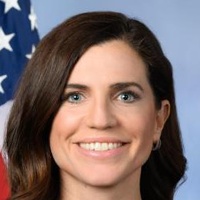
Nancy Mace
Representative
SC-1
This bill formally establishes the policy of the United States not to recognize the Taliban's government in Afghanistan, viewing their takeover as illegitimate. It prohibits federal agencies from taking any action that implies recognition of the Islamic Emirate of Afghanistan. Furthermore, the legislation mandates the designation of the Islamic Emirate of Afghanistan as a state sponsor of terrorism and designates the Taliban as a foreign terrorist organization.
New Bill Mandates Taliban Regime Be Labeled State Sponsor of Terrorism, Permanently Blocking U.S. Recognition
The “Preventing the Recognition of Terrorist States Act of 2025” is a piece of legislation that gets straight to the point: it slams the door shut on any official U.S. relationship with the Taliban regime in Afghanistan. Specifically, the bill mandates that the U.S. government will never recognize the Taliban’s “Islamic Emirate of Afghanistan” as the legitimate government, viewing their takeover as an illegitimate coup d’état (SEC. 2). More critically, it puts teeth behind this policy by forcing two major legal designations that will severely restrict U.S. action and funding related to the country.
Codifying the Cold Shoulder
This bill doesn't just express disapproval; it prohibits federal departments and agencies from taking any action or providing any assistance that even implies recognition of the Taliban's claim to sovereignty (SEC. 3). This prohibition isn't just diplomatic window dressing. It explicitly bans the use of federal funds from the Department of State, the U.S. Agency for International Development (USAID), and the Department of Defense (DoD) to prepare or enforce any policy that extends diplomatic recognition to the Islamic Emirate of Afghanistan. Think of it as permanently cutting off the budget for any future attempts at normalizing relations, making it nearly impossible for future administrations to pivot on policy without a new act of Congress.
The Double Whammy: SST and FTO Designations
The real impact of this bill comes from Sections 4 and 5, which remove executive discretion and mandate two powerful terrorism designations. First, the Secretary of State must designate the Islamic Emirate of Afghanistan as a State Sponsor of Terrorism (SST) (SEC. 4). This designation is a big deal, triggering massive sanctions across multiple laws, including the Export Control Reform Act and the Arms Export Control Act. For U.S. businesses, this means extremely tight restrictions on trade and financial transactions with Afghanistan, potentially affecting even non-governmental organizations operating there.
Second, the bill mandates the designation of the Taliban itself as a Foreign Terrorist Organization (FTO) under the Immigration and Nationality Act (SEC. 5). The FTO designation makes it a crime for anyone in the U.S. to knowingly provide material support or resources to the group. These mandatory designations—SST for the entity controlling the state, and FTO for the group itself—create a comprehensive legal wall that is difficult to climb over.
Real-World Friction Points
While the goal of isolating a regime that includes designated terrorists like Sirajuddin Haqqani (SEC. 2) is clear, the strictness of this bill raises practical questions. By prohibiting any action that “states or implies recognition,” the bill risks tying the hands of agencies like USAID. Imagine a situation where the U.S. needs to coordinate with local authorities—even indirectly—to ensure the safe passage of humanitarian aid or to evacuate a stranded U.S. citizen. The broad language could make diplomats and aid workers hesitant to engage in even necessary, non-diplomatic communication, fearing they might run afoul of the law's strict prohibition on “implying recognition.”
For aid groups and U.S. entities still trying to help Afghan civilians—who are often desperately in need—these mandatory SST and FTO designations complicate everything. The severe sanctions and legal risks associated with these labels mean that even routine financial transfers and operations become exponentially harder, potentially making it more difficult and costly to deliver aid to the very people the U.S. often wants to support.