This Act establishes the Energy Non-Procurement List to bar federal procurement from foreign entities of concern involved in energy supply chains and prohibits the Department of Energy from contracting with them.
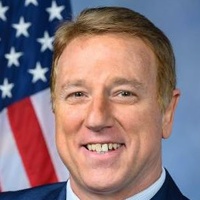
Patrick "Pat" Fallon
Representative
TX-4
The Securing Energy Supply Chains Act directs the Secretary of Energy to create a public "Energy Non-Procurement List" identifying foreign entities of concern within the energy supply chain. This legislation prohibits the federal government from procuring goods or services from any entity on this list. Furthermore, it requires annual reporting to Congress on the list's contents and mandates a study to harmonize overlapping federal restricted entity lists.
DOE to Blacklist Foreign Energy Suppliers: How the New 'Non-Procurement List' Could Reshape Your Utility Bill
The Securing Energy Supply Chains Act is straightforward: it mandates the creation of a government blacklist for foreign companies deemed risky to U.S. energy security, and then bans the Department of Energy (DOE) from buying anything from them. Specifically, the Secretary of Energy must create an Energy Non-Procurement List within 90 days, targeting any “foreign entity of concern” involved in energy infrastructure supply chains. The bill prioritizes entities dealing with critical materials and battery components, which are essential for everything from electric vehicles to the power grid. After one year, the DOE cannot sign or renew contracts with anyone on this list, or even with companies that fund or buy from those listed entities (SEC. 4).
The National Security Rationale vs. The Supply Chain Reality
This move is squarely aimed at reducing reliance on foreign adversaries for key energy components—a major national security goal. However, the bill gives the Secretary of Energy extremely broad authority to decide who makes the cut. The list can include entities that pose risks to U.S. national security, economic security, or even foreign policy, and the Secretary can add any other entity determined to be engaged in “detrimental activities” (SEC. 3). For a project manager at a utility company or a contractor bidding on a DOE solar farm, this means the ground could shift quickly. If your current supplier for a critical battery component is suddenly blacklisted, you have to scramble to find a new source that meets the DOE’s quality, cost, and timeline requirements.
The 'Unavailable' Loophole
Recognizing the immediate disruption this could cause, the bill includes a major escape hatch: the procurement ban can be waived if the needed goods or services are “not available from another source in the required manner, timeframe, or quantity for the project’s success” (SEC. 4). This exception is a clear acknowledgment that the U.S. currently relies heavily on some of these foreign sources. If the DOE needs a specific type of high-capacity transformer that only a blacklisted company can provide quickly, they can still buy it. But they have to report that decision to Congress and recommend ways to develop domestic sources, essentially putting the pressure on the U.S. to build up its own manufacturing base.
The Cost of Compliance and The Classified Annex
For businesses, the cost of compliance is real. Any company bidding on a DOE contract must certify that they are not a “covered individual or entity.” Furthermore, if a prime contractor uses a subcontractor that is later found to be covered—say, a supplier of specialized steel for a $300,000 subcontract—the entire contract can be terminated (SEC. 4). This forces U.S. businesses to conduct extensive, ongoing due diligence on their entire supply chain, which adds administrative overhead that often gets passed down to consumers.
Adding to the complexity, while the list itself will be public, the justifications for adding or removing entities will be submitted to Congress as a classified annex (SEC. 3). This means the public—and even potentially affected U.S. companies—won't have full transparency into why a specific entity was targeted, limiting their ability to challenge the decision or fully understand the underlying security concerns. This lack of transparency, coupled with the Secretary's wide discretion, is the part of the bill that deserves the closest watch.