This bill establishes a grant program to expand home-based telemental health services for rural and agricultural communities.
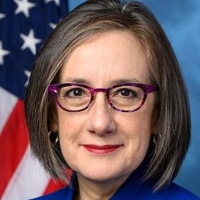
Andrea Salinas
Representative
OR-6
This bill establishes the Home-Based Telemental Health Care Act of 2025 to expand access to mental health and substance use services for rural and agricultural communities. It creates a grant program for eligible entities to deliver remote telehealth services directly to patients in their homes. Funds will support service delivery, quality measurement, and the necessary technology infrastructure, including broadband expansion.
New Bill Pushes $10 Million Annually to Bring Mental Health Care Directly to Rural Homes via Telehealth
This new legislation, the Home-Based Telemental Health Care Act of 2025, sets up a dedicated grant program to tackle a massive problem: the lack of mental health and substance use services in rural areas. Starting in 2025 and running through 2029, the bill authorizes up to $10 million each year to fund nonprofit telehealth networks that can deliver care directly to people’s homes.
The Care That Comes to You
What’s the core idea? Taking the clinic out of the equation. This program targets two specific groups, which the bill calls ‘covered populations:’ people living in rural health professional shortage areas, and anyone working in farming, fishing, or forestry occupations. If you’re a ranch hand or a commercial fisher miles from the nearest town, this bill is designed to bring a mental health professional to your kitchen table via a screen, eliminating the need to drive hours for an appointment.
The grants, overseen by the Secretary of Health and Human Services in partnership with the Department of Agriculture, are strictly earmarked for three things. First, actually delivering those home-based telemental health services. Second, developing solid data metrics to measure the quality of this remote care compared to traditional in-person visits—a crucial step for making sure telehealth isn't just convenient, but effective. Third, and perhaps most practically, the funds must be used to support the necessary infrastructure, including expanding broadband access and providing devices like tablets to patients who might not otherwise have the tech to connect.
Breaking Down the Digital Divide
For people living in rural areas, access often hinges less on insurance and more on infrastructure. If you’re a farmer struggling with the isolation and stress of volatile markets, the last thing you need is a 100-mile round trip for a half-hour session. This bill recognizes that reality by explicitly requiring grant recipients to invest in the tech side of the equation. This means funding could go toward setting up a mobile hotspot for a patient, or helping a provider upgrade their system to reliably handle video sessions across long distances. It’s a direct attempt to bridge the digital divide that often prevents telehealth from reaching the people who need it most.
However, there are a few details worth watching. The bill defines who can provide care as a “Professional trained in mental health,” but requires them to act under a psychiatrist’s direction. While this ensures a high standard of oversight, it could create administrative hurdles for smaller, independent clinics applying for the grants. Also, while the $10 million annual authorization is a clear commitment, the bill states the money will come from “any available funds.” That’s standard legislative language, but it means the actual funding level each year will depend on the broader appropriations process, which can sometimes be a bumpy ride. Overall, this is a targeted, practical approach to solving a persistent crisis in rural healthcare, focusing on both the human side (access to care) and the practical side (access to reliable internet).