The School MEALS Act of 2025 aims to increase access to free school meals by piloting direct certification via Medicaid data, providing grants to improve certification rates, and enhancing the Community Eligibility Provision.
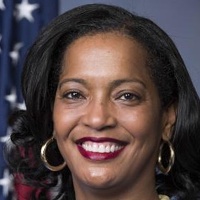
Jahana Hayes
Representative
CT-5
The School MEALS Act of 2025 aims to improve access to free school meals by establishing a pilot program allowing states to use Medicaid data for direct certification. It also creates grants and technical assistance to boost direct certification rates across the nation. Furthermore, the bill enhances the Community Eligibility Provision (CEP) counting periods and increases the minimum verification sample size for direct certification.
School MEALS Act Launches $28M Fund to Streamline Free Lunch Enrollment Using Medicaid Data
When you’re juggling work, kids, and rising grocery bills, the last thing you need is more paperwork just to get your child a free lunch at school. That’s the real-world problem the School Modernization and Efficient Access to Lunches for Students Act of 2025 (School MEALS Act) is trying to solve.
This bill is all about making sure kids who are already eligible for free school meals actually get them, primarily by cutting down on the bureaucratic hurdles. It’s a policy package focused on leveraging existing data and providing serious cash to states that need help getting their systems up to speed.
The Data Match: Medicaid Meets Lunch Line
The biggest change here is a three-year pilot program authorizing states to use Medicaid eligibility data to directly certify children for free school meals (SEC. 2). Currently, many children are certified directly if their families receive SNAP benefits, but this expands the net. Think of it this way: if the state already knows your income qualifies you for Medicaid, why should you have to fill out a separate, complex application for free school lunch?
This move is designed to reach kids who might be eligible but whose parents haven't applied or missed the paperwork. For the busy parent, this means one less form to fill out and a guarantee that their child is covered. However, since this involves sharing sensitive household income data between agencies, the pilot status suggests regulators will be watching closely to ensure privacy is maintained.
$28 Million for Tech Upgrades and Training
Recognizing that linking these massive government databases isn't easy, the bill establishes a new grant program funded with $28 million starting October 1, 2025 (SEC. 3). This money is specifically earmarked to help state and Tribal organizations improve their direct certification systems. Priority goes to those with the lowest current enrollment rates—the places that are clearly struggling the most to connect eligible kids with meals.
For state agencies, this means they can finally afford to upgrade the ancient software they use, hire technical assistance, and coordinate better with other benefit programs. Crucially, at least $2 million is dedicated to Tribal organizations managing the Food Distribution Program on Indian Reservations, a targeted effort to improve access in often underserved communities.
Making Universal Meals Easier to Hit
The bill also tweaks the rules for the Community Eligibility Provision (CEP) (SEC. 4). CEP allows schools in high-poverty areas to offer free meals to all students, removing the need for individual applications. Eligibility is based on the percentage of “identified students” (those already certified through programs like SNAP or Medicaid).
Under the current system, the count for identified students often uses a single snapshot date (April 1). The MEALS Act changes this to use a counting period running from April 1 through the last day of the school year for calculating eligibility. This small change makes it easier for schools to meet the required threshold by capturing more students who enroll late in the year or whose eligibility changes. For a school district administrator, this increased flexibility means a more stable pathway to offering universal free meals, which simplifies their operations and ensures every kid eats.
A Little More Homework for the State
While the bill is largely focused on streamlining access, it does increase the administrative workload slightly in two areas. First, it doubles the minimum sample size states must use when verifying their direct certification matches, moving from 10 cases to 20 (SEC. 5). This is a technical step aimed at ensuring the data matching systems are accurate, but it means state staff have a little more verification work to do. Second, states that have been flagged for low enrollment rates will now have new reporting requirements detailing their progress and the effectiveness of the technical assistance they receive (SEC. 6). While this adds paperwork for the state, it ensures accountability for the federal funds being spent to improve enrollment.